Sunday, October 2, 2011

Hunting mushrooms

The wood

Hanningfield Reservoir
Yesterday we went on a mushroom foray, lecture perhaps would be a better term.  The weather was beautiful, and the woods almost had a magical air to them.  The unseasonal hot weather is a boon, though tomorrow winds from the west will arrive but we have had a few classical Indian summer September days.  We wandered round the edges of fields, bullocks and sheep grazed calmly, the grass in many places was still covered in  dew and was thick and rich. Our guide was an expert, and of course did not talk about which was an edible mushroom, its just too tricky in this quick trigger world of compensation.  One man did collect the Amethyst Deceiver for the stew pot, these were my favourite coloured mushrooms, delicate hues of lavender buried deep in the coppery-brown undergrowth.  We came across one of the stink horns, a rather small example but there was also a creamy 'egg' from which they emerge, this was found by a small girl called Fern, who happily hunted and tackled the brambles to bring out the mushrooms buried deep in the woodland floor.
Bracket fungi, common earth balls (got excited about these), apparently though they are poisonous, very inconspicuously buried in the leaves.
We eventually made our way back to the centre, it was a three hour session, and he laid all our trophies out must have been about 60 or 70 different species on the table, and we wandered round looking at them.  The ones I remembered are the spindle mushroom (being a spinner of course), the milk cap, apparently as there are so many of them, if you nibble them gently and the lactose is extruded (the ones you are sure about of course) the different tastes will tell of their potency, there is a peppery one out much fancied by gormandising mushroomers!  Shaggy parasol is another I can now identify but to be honest it would take a whole lifetime to really learn about these strange creatures called fungi, I think he said they are fauna more than flora, because they eat everything, in microscopic form anyway. 


LS took a photo of our guide dressed in his green camouflage jacket, he was an expert in his subject and if he could not identify something he would say so.  Pottering around old woods looking for fungi is not a bad occupation my only worry about it all was the actual picking of them. were they rare....


Bracket fungus and the black blobs above are 'King Alfred's Cakes' fungi

Closer view


Not sure

Spindle mushroom


Shaggy parasol


half full

earth balls


Amethyst deceiver

Another one

Friday, September 23, 2011

Autumnal Equinox 21st to 23rd September


Slightly late but the soft warmth of September is still here and as I wonder whether to buy some winter primroses for the garden, there is also the added bonus of log fires and candles as days turn to long nights. Pagans call it Mabon, after a god, but the more important festival is of course Halloween at the end of October.


Season of mists and mellow fruitfulness
Close bosom-friend of the maturing sun
Conspiring with him how to load and bless
With fruit the vines that round the thatch-eaves run;
To bend with apples the moss'd cottage-trees,
And fill all fruit with ripeness to the core;
To swell the gourd, and plump the hazel shells
With a sweet kernel; to set budding more,
And still more, later flowers for the bees,
Until they think warm days will never cease,
For Summer has o'er-brimm'd their clammy cell

John Keats - Autumn


Moss at Wayland's Smithy, waiting patiently for me to get up and go

Wayland's Smithy tomb in Autumn
And something I wrote a couple of years ago......
http://heritageaction.wordpress.com/2009/09/29/waylands-smithy-restoration-in-the-1960s/

Thursday, September 22, 2011

Expeditions

Travelling to London yesterday from Chelmsford our train goes through Stratford and past the Olympic's shindig, and also of course the newly opened Westfield Shopping Centre, featured in some pretty bad advertising on TV. I doubt that we shall stop one day in Stratford to go round the mall even though it has 70 restaurants, it looks terrible and I DO NOT windowshop, preferring (when I need clothes) to shop online. But it looks pretty ugly from the outside as well.
We had gone in to see an old box that needed repairing, the box housed 6 beautiful 15th books, so it took us to the area around Christies and the antique shops there displaying their wares.

London terrifies me, when I have to travel on the tubes, the packed density could easily turn me into a gibbering wreck and the press of people is terrible. Of course when you emerge the same thing happens humanity everywhere, different languages and noise of traffic.
So we made an early retreat and ended up the good old Fox and Raven back home for a pot of tea and a meal, the relief was tangible, sitting next to the big  table that the family always sit round when they come down and the old magnolia tree outside, a climbing frame for children.

Piccadilly Circus

Olympics Stadium

Westfield Shopping centre

Old pub with modern buildings on either side


Calmer photos from the weekend, we went back to Ulting church, our first visit had been in the cold of winter a couple of years ago, and though we often see it from the other side of the river, there is no walking path on the left hand side.  Two fisherman with enormous lines were fishing on the other bank, apparently there used to be eels in the river as well at one time.  The church is locked and was restored in the 19th century, so inside it must be typical Victorian, but it is a very peaceful and tranquil place at the end of a green lane.  I have written of it elsewhere, there is a lot of pudding stone in the fabric of the church, the 'living rock' of pagan times....


Ulting Church


Long forgotten and stacked neatly


Pudding stone rock, conglomerate pebbles

Ulting Church previous article

Saturday, September 17, 2011

Saturday, 17th September 2011

Another week passes and not much happens, we've been for walks and I did set myself the task of naming some of the yellow flowers that appear at this time of the year.  Ragwort of course, and fleabane maybe and also yellow chamomile which I never took a photo of but reading Grigson on the subject of these flowers rather took me away from identifying them ....
This time we went to Sandford Brook, you park by the ford, and go into the Reserve there, slightly spooky place, because there is always a few cars with single men hanging around, for what reason I don't know but I can make a pretty good guess...
The brook has the choked weed appearance of the little river Ter, pretty, but dying, policeman's helmet flowers line the banks along with reeds and it feels that someone should come and clean the brook out.
We also went a long walk at Paper Mill, met up with some Greek dogs, rescued and sent over to this country for rehoming, they were all bounding along quite happily.  Further on Jack, a labrador who spent a lot of time leaping into the river after his stick, his owner sat by the bank as Jack tore up the grass at his feet whilst excitedly chewing a very long branch he had found.  Dogs seem to have the gift of play and his owner commented that the walk along the river path was the most peaceful one can find.
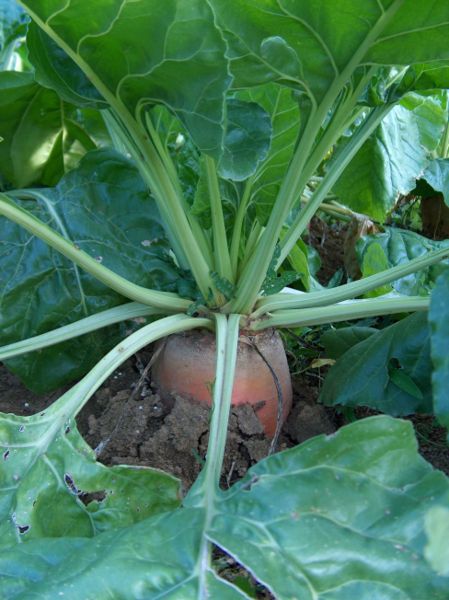
What else, we crossed over a little concrete bridge built 1951, to see what was on the other side, and discovered a field full I think of mangolds, something I had never come across before, I'm sure it was Mangolds that Tess of the D'Urbervilles was cutting in Hardy's book. Anyway I purloined a photo from the Creative Commons, apparently the plant was only introduced in the 18th century, and what was so obvious was the spinach like leaves (you can eat them) and the large bulbous root.
This video is funny it was put on F/B by Rupert Soskin, he and Michael Bott created the very good Standing With Stones CD, this other video is funny but scary, its called "World Collapse Explained in 3 Minutes" and as the last week we lived through doom and gloom on the news, puts it neatly in place....

Marina Hyde also cleverly  gives  a slightly different interpretation on the term 'rogue trader' in the Guardian, so you only become a rogue trader if you lose money? so what are you called when making money in the same business? makes you think when the police take him away to be tried, still you should'nt gamble with other  peoples money!....


Jack trying to get out of the water

You can see I've fallen in love with him

The brook


Mangold from Creative commons

Wednesday, September 7, 2011

Autumn appears

What is the first sign of autumn I wonder, the answer for me is those large spiders that scuttle across the carpet, you catch the movement out of the corner of your eye as they head for the skirting board and then the sofa.  They come in from the cold to the dry, too hibernate or maybe too die?
Could of course be the torrential rain and winds that whipped through the trees yesterday, the first autumn storms, or maybe even the starlings who seem to have departed elsewhere a few days ago.  There are hundreds round here, feeding on the green in front of the house, bright plumages gleaming in the sun.  Perhaps they have flown to France to see if the weather is better there.  The little sparrows are still around, soft brown furry balls hopping around, squabbling at the seed holder for first place. And in the last few days a couple of young collared doves have come down to the lawn.  Feeding on the lawn the other day, one of the young magpies came down and marched up slightly belligerently to the young doves, mother and father doves immediately flew down furiously to protect their two and the young magpie squawked and flew away.  Young magpies do not grow their tails for quite a while so it has been a bit strange watching our two hop around practically tailess.
I note friends are harvesting the wild fruits, we haven't been yet,  but it reminded me to look up the time of the sweet chestnut harvest, for there is a wood not too far away with plenty of old trees and of course mushrooms - too record not eat, though we have signed up for a mushroom lecture/walk in October.

It seems I should find an Autumn poem but there is sometimes a tinge of sentimentality that I dislike in 19th century English poetry, shall have to find my Welsh poet - R.S.Thomas out for real misery, so skirting past Tennyson and Shelley, two short snatches from the Geoffrey Grigson's anthology Cherry Garden; The following poem sounds almost Saxon with its reference to wolves...

Slieve Gua - from the Old

Slieve Gua, craggy and black wolf den;
In its cleft the wind howls,
In its denes the wolves wail

Autumn on Slieve Gua; and the angry
Brown deer bells, and herons
Croak across Slieve Gua's crags

Rushes in a Watery Place - Christina Rossetti

Rushes in a watery place,
and reeds in a hollow;
A soaring skylark in the sky,
A darting swallow;
And where pale blossoms used to hang
Ripe fruit to follow.

http://northstoke.blogspot.com/2010/10/fungi-in-blake-wood.html

Sunday, September 4, 2011

A walk to the pub

Walking down to the pub - The Fox and Raven (the old Barnes Farm) and capturing bits and pieces, so much yellow of the flowers in the fields that it would be impossible to record it all.

But the borage stood out, though strangely the pale pink of the mallows dragged the colour out of the vivid blue. Tall teasels illustrating the complex world of plants. Great dragon flies hawked (describes them so accurately) up and down the river, rising noisily from the vegetation when disturbed. I've written about Barnes farm elsewhere, but the gardens of the pub still reflect its old history, the tennis courts now turned into a car park, the large old magnolia tree, glorious in the spring, and which always calls the children to climb it when we go there. We were there last weekend, large table for the family lunch, steaks for the carnivores, and fish/chips for the girls.

I expect you would call this interface between town and countryside, or even suburbia and countryside, a very ordinary typical brown site going into green belt, the wearing away of the edges of the green belt as new houses appear but the tranquillity of the river still captures the essence of the past, the intergration of mill and old farm buildings still there but changed into homes and restaurants...
  
Clash of cultures

It calls to mind the other news that is going on in another part of Essex - the Dale Farm gypsy encounter where the council is trying to evict part of the camping site. Joan Bakewell writes in the Telegraph - Why can we never abide gipsies and those with no fixed abode? .  There is no answer of course, prejudice is often deep-seated, and the gypsies's traditional values clash with modern values that espouse bricks and mortar as a safe bet for one's money; education as a way to gainful employment.  But its funny that in our society that makes so much of our history, think of all those 'great' houses that we pay to visit, that we can't find a solution  to this problem of allowing the gypsies a safe haven somewhere.

Lord Eric Avebury (champion of many causes) has said this.....

In the afternoon I had a visit from Sean Risdale and Matthew Brindley of the Irish Travellers movement in Britain. In spite of all the excellent work done by the ITMB, and their success in lobbying the UN Committee for the Elimination of Racial Discrimination (CERD), it looks as though Dale Farm is at the end of the road and the evictions will be going ahead some time in the next few weeks. The CERD issued a statement yesterday criticising the evictions, see below.

The really sad thing about this disaster is that if there hadn't been a change of Government last year, there was a good chance that the Dale Farm question would have been solved, with some of the residents going to sites in other Districts within the county. As soon as Secretary of State Pickles announced the end of regionalism just after polling day, scrapping the target number of pitches for which planning permission was to be granted in every local authority area following a laborious process which had been accepted grudgingly throughout England, the rest of Essex said either that they weren't going to provide any land at all for Travellers, or that they were going to take some time to make up their minds what to do. So the families in the 51 pitches to be evicted, including pregnant women, the elderly, disabled and small children, are going to be homeless when their dwellings are carted away on low loaders and put into a store somewhere. Its an £18 million caastrophe, causing immense and unnecessary suffering.

And just as a note; a government e-petition on the eviction has only 6 signatures so far...


Borage and mallow
Face masks to keep the flies away

Roses round the gate


Borage, not captured well by the camera but the blues reflect a beautiful sunny day

Queen bee amongst the lavender at the pub
Lavender hedgerow always full of honey and bumble bees


Corner of the mill down the cul-de sac to the river


Should be two large reddish brown dragonfly flying down the river but of course the camera missed them!


Teasels


Friday, September 2, 2011

Carn Meini


One of the things I do each day is go though the news online on a particular feed, well yesterday it came up with the news that the archaeologists Wainwright and Darvill had found a neolithic tomb by the Carn Meini rock outcrop - the supposed site of the bluestones used for Stonehenge.  The tomb, with what looks like two upstanding stones is sited on top of an earlier henge, and the two archaeologists have put forward the theory that this may be the grave of the high ranking person who had the bluestones transported.  Well there are always theories, weird or otherwise that revolve round prehistoric tombs, stone circles etc, and as there is no proof one way or the other there is a 'state of unknowing' as to what has happened in prehistory.
Even Wainwright says in the Guardian article that....it was a "jump" to claim the person buried there was an architect of Stonehenge. "It's a hypothesis but it could well be true. There is certainly something very significant about the grave."
There is a photo of the passage grave in the BBC news here, and perhaps one of my favourite links for the Preselis is the S.P.A.C.E. Landscape & Perception Project, which treats the subject in a more esoteric manner, and also has some good photos of the area.


Monday, August 29, 2011

They are back safely - thank goodness

The beginning of the journey

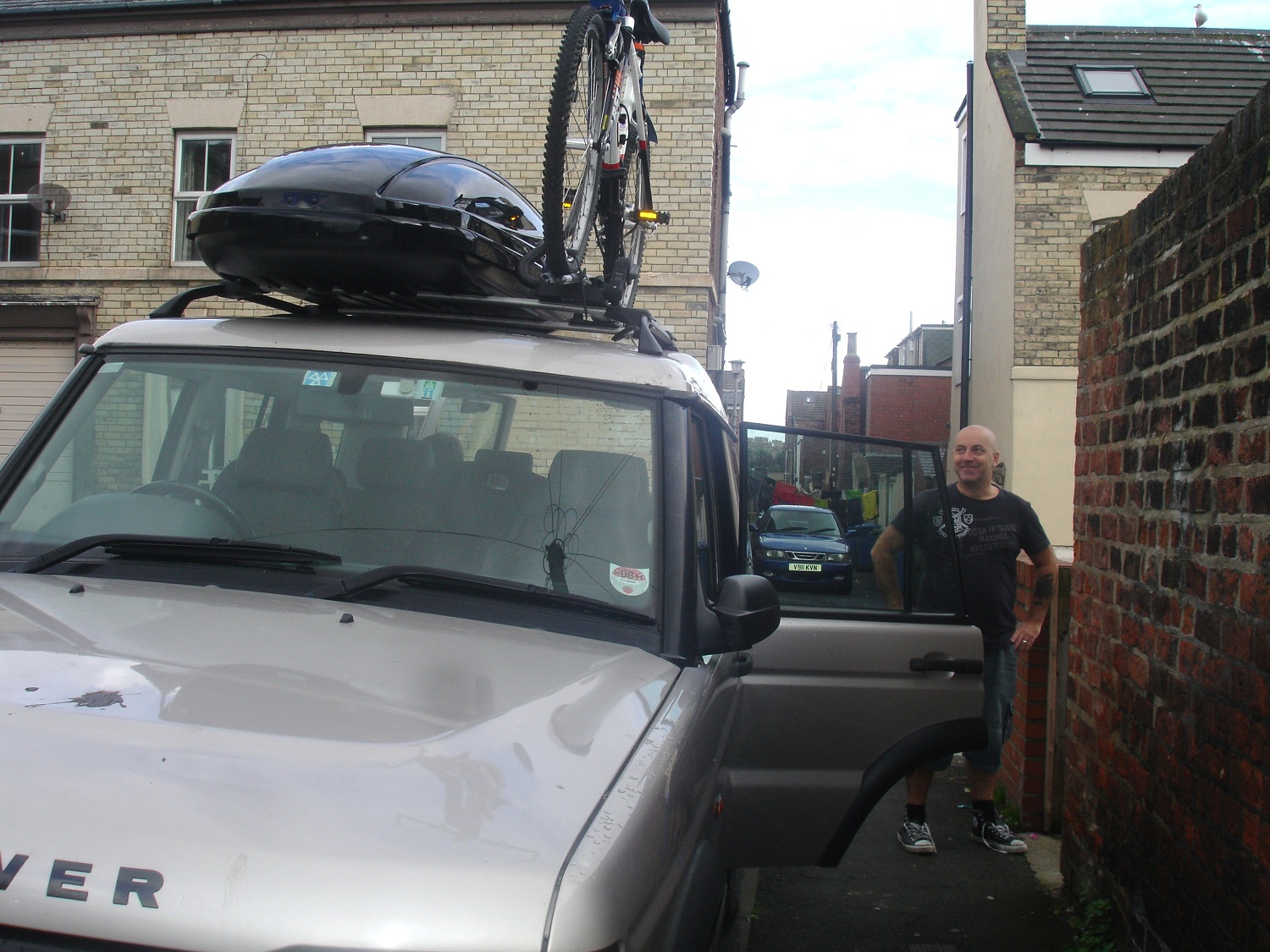
the car loaded to the gunwales on the way back to Whitby - 2200 miles all told

The land rover arrived early saturday morning, they had travelled from Vevey to England without staying overnight in France, so everyone was tired.  Apparently they sat outside our house from 4.30 onwards and then went and found breakfast at McDonalds.  The fridge was temporarily completely filled with chocolate and cheese, my daughter having raided Migros in Switzerland, she has a fascination with supermarkets, Whitby only having the Co-op.
Switzerland is lovely but expensive, you need to earn  quite a few thousand each month to pay the bills; from their flat balcony they watched the house over the road which had an electric lawn mower which came out at 6 every morning and mowed the lawn all by itself, something I've never seen in England, but my son in law was captivated by the country, especially the town of Gruyere, and the children did eat the many dishes of a raclette their great aunts had cooked for them, cooking one's food at the table was a great treat.
And just to add to the weekend my son and his friend showed up from a wedding they had been to in London, and I was given another side of the story about Gadaffi from an African point of view - interesting,  in that what we take for granted in our propaganda is seen very differently in the African states where his money has helped.
They also did a tour of the sushi factory that my daughter's cousin owns, the funniest photo of them all dressed in plastic, even little Lillie who had to have parts of her overalls chopped off.  Sushi was tasted but not I think by the children, though Tom the eldest is always adventurous in food, sushi is of course always a source of topic in this household, and it looks like we maybe be going to Kyoto in November, though sushi is not exactly my favourite but the temples and moss garden are on my list of things to do..


Matilda trying her hand at woodwork

Crashed out whilst watching a video


Tuesday, August 23, 2011

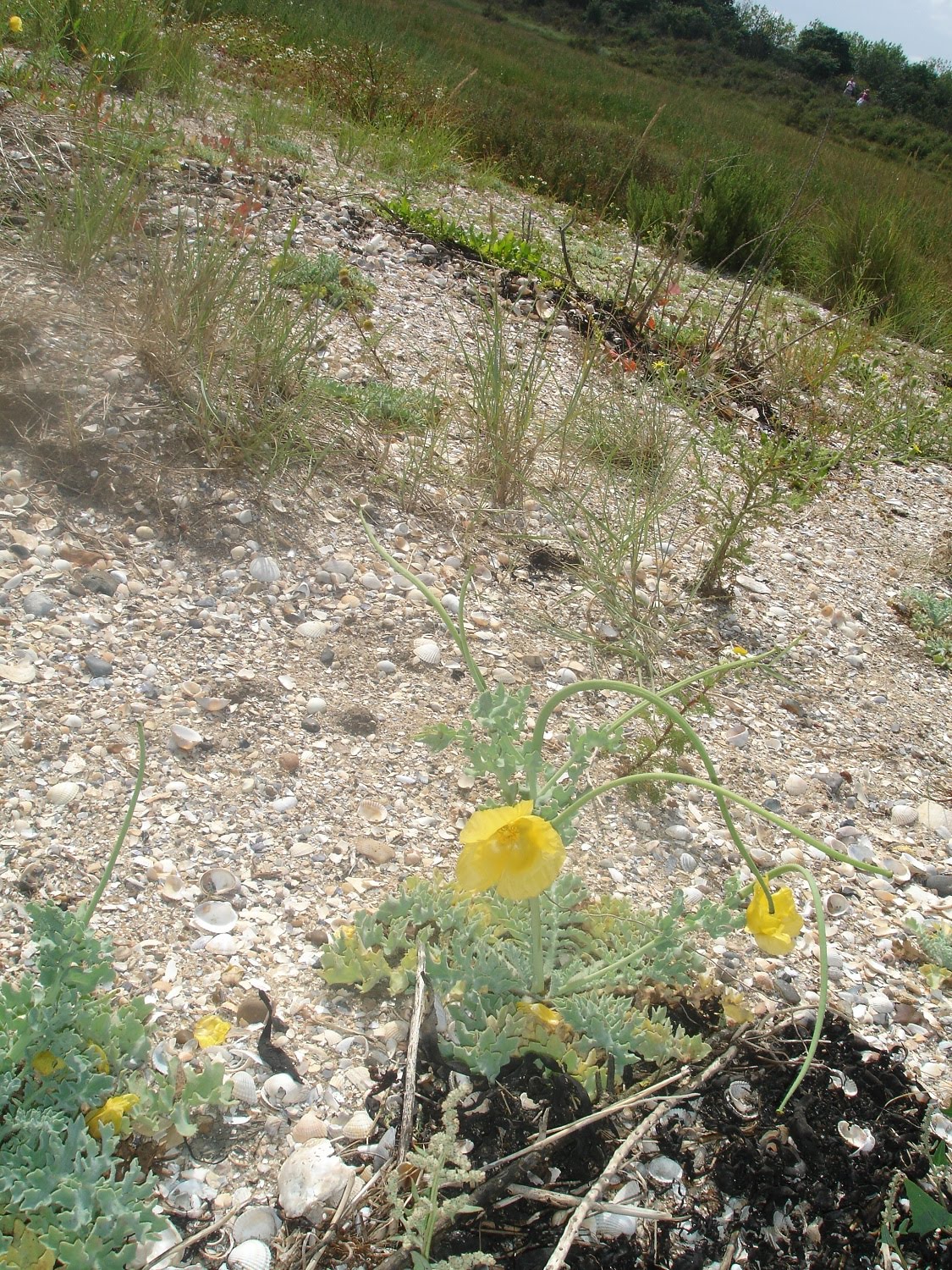
Cockle Spit - Bradwell on Sea

 poppies


Cockle Spit salt marshes

St.Peter's church; The altar lit up by the sun falling from the window

The grass verges on the Roman road to the church


Cockles piled thickly everywhere on the mudflats


Friday, August 19, 2011

Musings

Whitchurch, near to Solva
19th Century well down the lane from the church
Old settlement above the well

wall through the woods showing old field layout

If I had more time on this earth, I would solve some of the puzzles that irk my curiosity, one of them is the history of the area around Middle Mill, two places come to mind King's Heriot just up the lane, and Whitchurch - the white church, which is also on one of the lanes leading away from the pack horse bridge at the mill.  Welsh history is a self-sufficient tale of small communities, reading as I have been this morning on a survey done on church/chapel attendance on a single day in the 19th century and you will find that chapel attendance was well attended the church not so. The church above was on the pilgrim trail to St.David's Cathedral, and if you were to follow the lane past the church to that small city you would find on your right an old airfield as shown on this map.
 http://www.old-maps.co.uk/maps.html?coords=179900,225500

The photos above show the church, it is supposed to have a cross-stone by the gate but I have never found it, walking down the lane from the church to Middle Mill, there is a small footpath on your right into the woods, just opposite some cottages.  Taking this footpath you come to the rather pretty 19th century well deep in the wood, to your right there is the wall of an old field and above you can trace the outline of an old settlement.  What the old settlement is I can find no information on, Magic Map (Scheduled Ancient Monuments) gives no clue; it could be Iron Age or medieval, but its distinct narrow pattern plus the bank, points to I/A.

But the reason one falls in love with Wales is because so many parts are neglected, overgrown and beautiful, sadly because  there is literally no way of earning a living in the more remote parts. Life had always been hard, the brutal force of Norman castles bears testimony to overlordship, the topography of the land difficult for farming.   Solva and St.Davids rely on tourism, but they are protected from the worst influxes of the tourist trade by the fact that it is a protected National Park along this particular part of the coastline.
But if you wander around the area as I have done for many years, mostly looking for prehistoric stuff, you chance on other stuff.  One of them is old airfields, the defence of the Atlantic coast in WW2, meant that this part of the coastline seems to have a disproportionate amount of airfields.  Brawdy for one, still occupied just outside Solva; the disused airfield that borders Whitchurch and Solva, and another disused airfield out of Upper Solva which lies just above Nine Wells.

The photos below are of somewhere on the Presceli's; parking further along the road from Waldo William's stone,  from here is one of the places you can walk to Carn Meini and the Bluestones.  Several years ago meandering along on a long walk that way I happened to come across the remains of a plane and a dedication to the men who had lost their lives in the crash.  As you can see it must have been one of the planes coming in to land on one of the coast airfields.  70 odd years later, traces still remain, though I have no history of this for the moment, my partner wrote a small article on The Journal entitled Battle of the Prescelis , which shows the interest the War Office had after the Second World War to turn Prescilis into a permanent military training area, similar to Salisbury Plain by Stonehenge, which is ironic given the Bluestone connection.


Refs;  Trevor Bloom - History of Solva

Note; The Heritage Journal is run by a small group of people, ostensibly for prehistoric stones protection, but we have been running other articles as well....