Monday, November 10, 2014

Spinning -1


Teased out ready for spinning
single ply
to be plied

plied and on the niddy-noddy

close-up


From its purple and green tones it has now become blue.

Sunday, November 9, 2014

From cromlechs to batts


I start this morning with some BBC news, this rather tumbledown house in Pembrokeshire is to be restored by the National Trust and will eventually serve its purpose as a holiday home, it sits above St.David's Headland and belonged to a man called Glyn Griffiths who died last year, you can read Jackie Morris's blog on her next door neighbour.  Jackie Morris is a children's author and lives on the slope of this hillside which is called Carn Llidi  with her cats and dogs. In the following photo if you look at the background you will see the farmed land that abuts this rather wild and windy headland.

The photo is taken from 'Warriors Dyke' hill fort and this is the largest defending bank.


A lonely cromlech, hidden amongst the rocks looking toward Carn Llidi
St David's headland is a desolate place, but will give you a taste of Wales, the underlying rock, the boggy saturated ground.  On Carn Llidi itself are another two 'hidden' cromlechs . Why hidden? well I guess it is raids from the Irish just over the water, but the two cromlechs are against a rock base on Carn Llidi, in front funnily enough there is a concrete square, part of World War 11 defences, and it should not be forgotten that such archaeologist as Grimes, was employed by the MOD in those days to find suitable places for temporary airfields and gunnery placement. The following cromlechs are adjacent to each other.


The two cromlechs on Carn Llidi


--------------------------------------------------------------------------------------------------------------------------

Yesterday the postman knocked, he was delivering two parcels, one was a book ordered just under a month ago, and I had almost given up on it, but it came from France, and I was so happy to see it, an old favourite with the picture of the Gundestrup Cauldron on the cover.


The other parcel was some batts from Limegreenjelly.  I have never spun from a batt, but basically it is similar to tops, only you have to draft it from the beginning to get the 'loft' from the wool.  The wool is handpainted, and then is carded on a drum card, you can basically change the colours around as you draft.


Starting work on the St.David's cottage


Saturday, November 8, 2014

All that glitters............

The collared doves have produced two young and they sit around the garden presumably waiting to be fed, a little chivying should make them explore other possibilities for food before they become to tame. It is best not to get too attached, there are sparrowhawks round the gardens who quite happily kill the doves.


The other creatures in the garden are the hedgehogs, the mother came out the other day, and I feed them on cat biscuits and crushed peanuts to build up some winter weight for their dormancy period.


Yesterday LS had to clear up some spilt gold in the box he keeps it in, gold is used on the scrolls, either in the form of 'sprinkle' or thin sheets of foil are used to edge the scroll, and we both dipped our fingers in the gold and swallowed, it doesn't taste of anything but is supposed to be good for you and is used in medicine. As you can see the sprinklers are part of the box as is the fine paper that you press the gold down with to flatten it.  Also the offcuts of gold from the sheets of foil.

the shakers are in the front

Offcuts

This is I think platinum

Gold dust sprinkled on the carp painting
Something had been niggling my mind over gold, a piece of news about Saxon gold, apparently the Saxons knew how to change gold to its highest gold quality as Maeve Kennedy in the Guardian explains.  Not quite alchemy but a sure knowledge of the science .........

"The technique was not written down in Anglo-Saxon times, and had never been detected in metalwork from the period, but a similar technique was known from Roman accounts. It must have been spoken about by the brilliant Anglo-Saxon metal workers, and involved taking gold which was alloyed with up to 25% silver, and heating it in an acid solution – made from iron rich minerals such as brick dust – so that at the surface the silver leached out and could be burnished off. The surface would then appear to be the highest quality gold, but just below the surface there was inferior metal."

If we have time when we go to Whitby soon I hope we can visit the York Museum, as there seems to be an exhibition on, and there is also some things from Lastingham church I want to see, and perhaps explore the Roman occupancy round the part of Yorkshire we know best.


Friday, November 7, 2014

Hunting - miscellaneous


Heywood Sumner's Stonehenge in it's complete form, a Ministry of Works leaflet.  Heywood Sumner is a favourite artist of mine I have written of him before,  He was a friend of William Morris but went for his own style based on the Arts and Crafts movement of the time.  Probably a favourite of his archaeological illustrations is the following..


There is something quite reassuring about the above, the swirling lines of the stream, the ponies with their load of pottery, shame it is not a good picture!  But on exploring his work, I find the easy swirling paintings of the New Forest a relief to the eye, something to contemplate, a serene example of nature.  The soft rounded downs echos the bushes and trees...


But he was an accomplished artist as this poster shows, one of four at the Victoria and Albert Museum depicting the four seasons.


You can of course trace the William Morris influence in the words, and Sumner drew the outline for this tapestry below for the Morris Studio.  It is called The Chace as in the 'chase', this time the hunting of a hind.  The edging of course tells all, and as I look at it it reminds me of the tapestries at the Metropolitan Museum of Art... The Unicorn Tapestries

The Chace


Part of the Unicorn tapestry, the unicorn is captured. Late 15th century.


When I started writing the road my mind was following  Roman and Stonehenge thoughts, and absolutely nothing to do with Sumner, but his illustrations  was  the only  picture that jumped into my consciousness,  There has been a release by English Heritage of 80 monograms online, and the one I was thinking of was the,Uley Romano-British shrine* which was christianised at a later date, and the evidence of sacrificial animals came to mind.
Of course the media hunt is on now after Ed Milliband, seen as a bad leader, the media has scented blood and have set the journalist hounds on him.  Not that I have much sympathy for the man but I do so hate  this witch hunting, as of course I hate the hunting of animals for sport.  

*The Uley Shrines: Excavation of a ritual complex on West Hill, Uley, Gloucestershire 1977-9


Thursday, November 6, 2014

Return of the Native

"Civilisation was its enemy; and ever since the beginning of vegetation its soil had worn the same antique brown dress, the natural and invariable garment of the particular formation … To recline on a stump of thorn in the central valley of Egdon, between afternoon and night, as now, where the eye could reach nothing of the world outside the summits and shoulders of heathland which filled the whole circumference of its glance, and to know that everything around and underneath had been from prehistoric times as unaltered as the stars overhead, gave ballast to the mind adrift on change, and harassed by the irrepressible New. The great inviolate place had an ancient permanence which the sea cannot claim. Who can say of a particular sea that it is old? Distilled by the sun, kneaded by the moon, it is renewed in a year, in a day, or in an hour. The sea changed, the fields changed, the rivers, the villages, and the people changed, yet Egdon remained."

Thomas Hardy's The Return of the Native

One of my favourite novels written by Thomas Hardy.  The National Trust has managed to buy Slepe Heath for £650,000, privately owned it will now belong to us and links two other heaths together. Amongst all the selling and privatisation that it going through this wretched government, sometimes something escapes thank goodness.

Tuesday, November 4, 2014

Things move on


I start with this scroll, perhaps the one I liked best which went through the studio about three years ago, to be sold on somewhere in Europe.  It is the colour that attracts and the serenity of the face, it was  about six foot long and took up most of the workbench.  
Well the workbench went to another home this sunday, along with two drying boards, all eight foot long and just fitting into the van Dominic had rented, along with an 'Ali Baba' pot for the paste and various items, so the studio has at last started to be broken down.  LS is not too sad, it is a big event in his life but there is relief there also.  Kneeling all those years at the Japanese workbench is uncomfortable and then when his eye played up a few months back (now recovered) he called a halt to work.  Scrolls still to be sent to a client in Cyprus, and the Japanese conservator, Kesaki from the British Museum still to come this month for some other stuff there will be less to move.  LS was the conservator to work on the Japanese scrolls at the museum, in fact he set up the studio there, and pulled out a long list of all the things he bought in Japan to be shipped to England for the museum, written neatly in pencil it was a long list from the tatami mats to the brushes.  
We visited Kesaki last year to view the studio with friends and also to to look at the exhibition he was preparing on Japanese erotic scrolls, which has since been and gone.  I did not take photos at the time, doubt if it would have been allowed with the exhibition still to come, but it was just a much larger version of LS's studio, in fact the only photo of that time is in the restaurant when I got the waiter to take the party.
Watching the van go, I did feel a pang of loss, what will happen now, talk of papermaking has come up, for instance if we had a clear river/stream/or beck at the bottom of the garden this could be feasible.  Middle Mill near Solva would have been the ideal place but we are not moving to Wales....


Monday, November 3, 2014

Bonfire Night

24 packets came in these tins.


In the 'olden' days, this is how I start a story about my childhood for the grandchildren....Well in the olden days on bonfire night, we would bake potatoes in the crisp tin box out on the bonfire in the garden, I can even see the spot, the vegetable plot.  Catherine wheels would be nailed to the fruit trees, 'volcanoes' would erupt at our feet, sparklers clasped in our gloved hands, and I think the rockets were anchored in the pop bottles.  So what are those bomb like sounds I have heard every night for the past few nights, as rockets flare across the sky - solitary pleasures of letting off the biggest most expensive firework....  It has somehow lost its way bonfire night, I am sure it is better in the smaller communities, when a great bonfire is built on the green, Bath always had an organised spectacular display. I suspect a lot of dogs will be happier when the fuss has died down and people stop letting off fireworks at every opportunity rather than one night which is the 5th!

Sunday, November 2, 2014

Holme-next-to-the-Sea


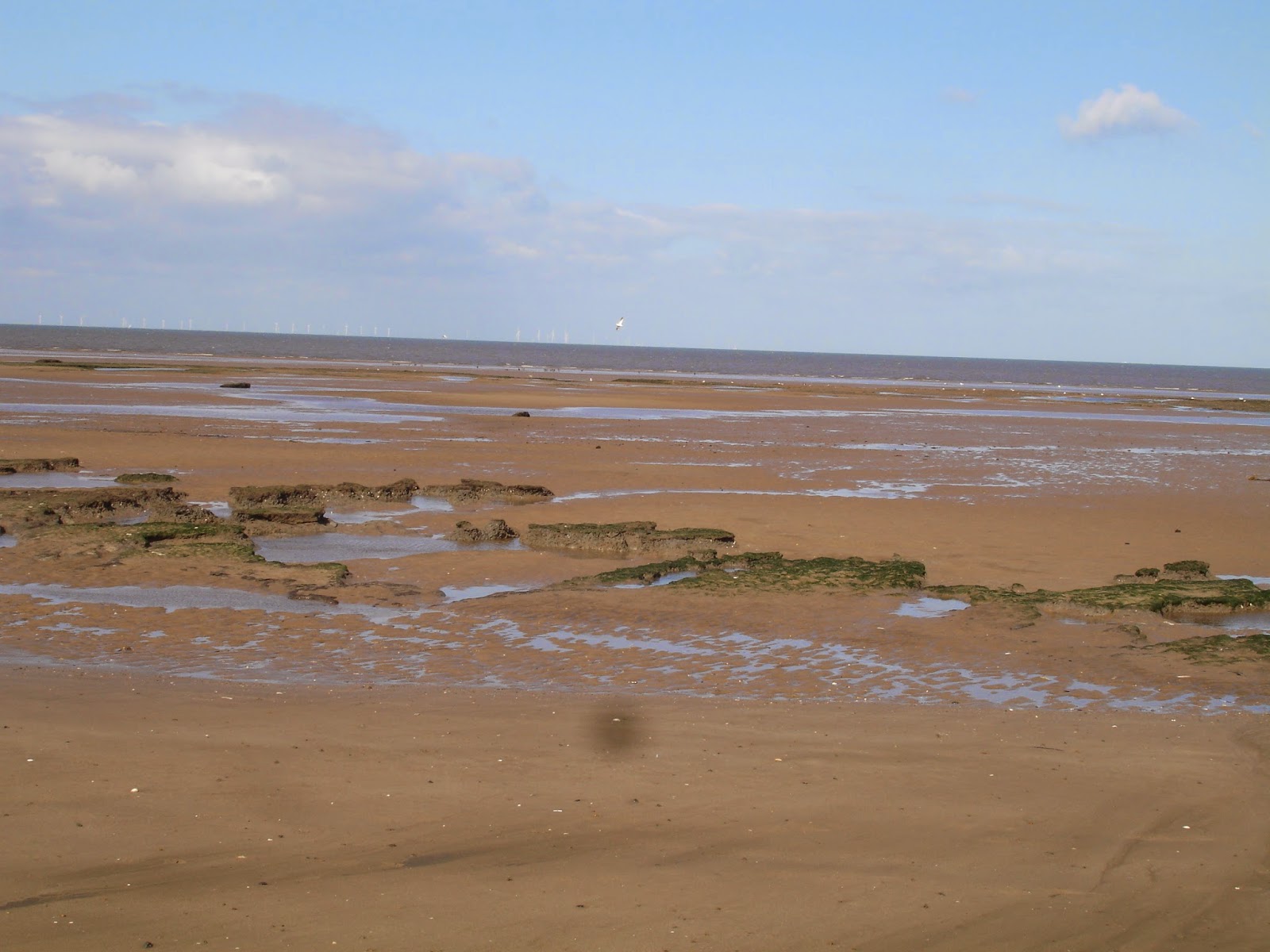
The changing landscapes photo is of the sea marshes round Holme-next-to-the Sea, the place is of course where the famous wooden circle Seahenge was found, the wooden posts of course are at Lynn Museum.  But it is the landscape I want to touch on for the time being.
The sea always encroaches our coastlines, creeping gently in sometimes, other times raging against the cliffs till they crumble and fall, occasionally drowning villages like Dunwich in medieval times which is perhaps the most famous incident as its ghostly church bells ring below the waves.
Norfolk is flat and rather monotonous when you drive through it, it has of course many fens that have been drained by the  Dutchman - Vermuydhen  Even today as you drive into the countryside you will see the long straight dykes through the fields taking the water away, and travel on that 'corduroy' road that bounces from ridge to ridge, probably heavy tractors have made these marks on the underlying boggy ground.
So where to start about the landscape where the wooden circle is to be found, firstly Seahenge in its day was not next to the sea, but probably in woodland, now the sands have washed over the land, and one of the things you will see alongside the board walk along the beach are the planting of bushes to hold the sand dunes in place.


Harebells


The beach is something else, it stretches into infinity, wind turbines turn their sails slowly on the horizon way out to sea, old land still holds tenuously to the sand as it ripples beneath your feet echoing the waves of the sea.


The gradual encroachment of sand


So why does Norfolk spark today's thought, well it is probably that someone called Dominic is coming to collect in his van the work bench and a drying board  and he is travelling down from King's Lynn in Norfolk, and it brings back memories of this sunny walk by the sea.  Today the weather is dark and grey and the wind rustles through the maple tree shaking the leaves on to the lawn. It brings back memories of our second visit to the museum with American friends, standing in the icy wind at Sutton Hoo looking at the barrow of the warrior buried in his boat, remembering Bucky at the museum where the Seahenge  wooden posts are kept causing a kerfuffle..  He had spotted that the timbers had recent cuts in them, presumably to take samples, so he had the staff phoning around the archaeologists to enquire about this.

Friday, October 31, 2014

Miscellaneous

The Nutshell Studies;

Yesterday there was a radio programme by Simon Armitage the poet, on an American lady who produced rather macabre vignettes or dioramas of unsolved murder cases in Baltimore in the 1940s, and in fact these cases are still used today to train the police in America.

I recognised a fellow miniaturist, interested in both the macabre history of murder and the need to create a model of the happening, although I believe in this case, being wealthy, Frances Glessner employed a carpenter.  Well I am not so macabre, but do watch the American series of CSI and NCIS for the fascinating forensic work on the victims and which she is apparently the inspiration for, and would have liked my grandson Tom to take a forensic police course at uni, but I think he is turning his studies more to business.

Archaeology of course has the same forensic nature to the unraveling and understanding of the context of the finds, though sometimes it takes many years for the reports to come out, and now as the world changes more and more books are written on the subject.  Years ago we had an annual magazine which was  called WAM (Wiltshire Archaeological Magazine), here would be the latest news and reports on Wiltshire, there would be a general description of a site, small reports from different people on the finds and then the summing up, or 'theorising' as it is now called. 

 Archaeology has taken a different road now, most 'digs' are financed mostly by the universities, except of course those that are privately financed by companies who wish to destroy a site to build homes or a road.  The need to publicise archaeological excavation has become more important in our competitive world, books must be written, sites defended...

One thing that has become apparent with the event of the internet, is the 'selling' of information, you can purchase some articles on line at a fairly high cost, but there is plenty to find free. The Archaeology Data (English Heritage) service has just published for free 85 monograms of various reports, most I believe out of date, so reading last night a favourite 'Saxon bed burial' at Swallowcliffe in Dorset I think was quite exciting - surprising what makes me happy!

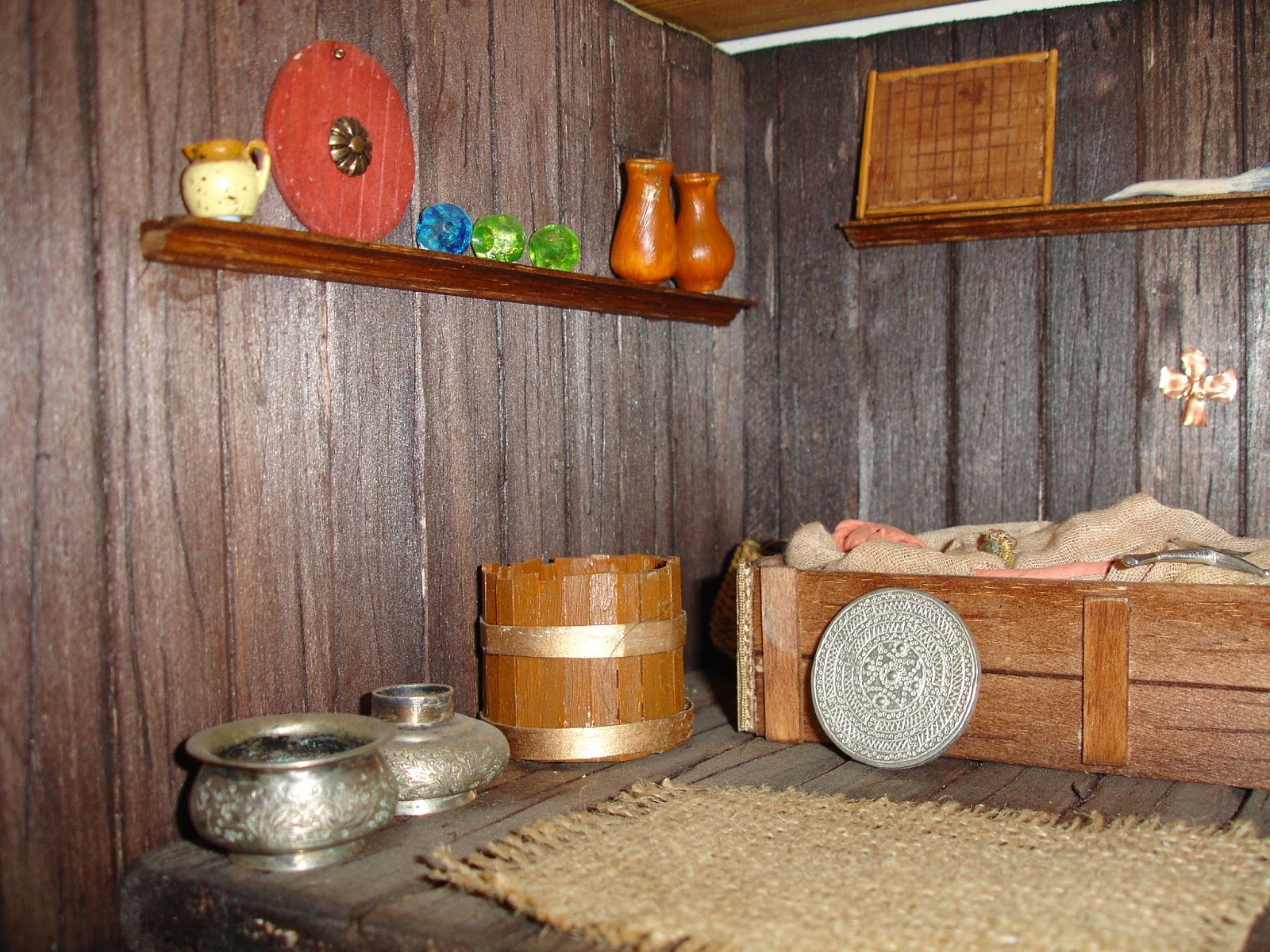
Mostly all made from scratch

The Prittlewell Saxon burial

Temporary room dressing, see how dusty it is, the dress was knitted with the finest of needles

And as it is Halloween, and according to some news yesterday that the Americans have spoiled the festival here is a blog on the Welsh tradition......
Or perhaps The Wild Hunt at Halloween, which is a much better sport than handing out sweetie to children ;)


Thursday, October 30, 2014

Magpies

Creative Commons


Magpies...What is there to say about these colourful, intelligent, playful birds.  I do not like the way they steal other bird's eggs in spring, the great squawks as they fly off in indignation pursued by a motley of defending birds.  But on the whole their presence is welcome.  My last blog covered the 'Boreham Beasts' so  right for this time of the year as Halloween approaches, with its stories of ghosts and the walking dead, in this case headless oxen and weird looking apes.  


But magpies are a favourite bird, and there is this attractive print which I love, drawn by Em, that resides in the corner of a bedroom .  But note the cluster of ancient artefacts around it, this is LS, two totally different worlds on what we see as beautiful.  I love colour, the monochrome of Japanese art (I can almost hear him  begging to differ) which is often brown does not agree with my aesthetics.
Colour, especially at this time of the year is so needed, we went to the Garden centre a couple of days ago to find some house plants, but really  for me to wander round the sparkling baubles in all shades of Xmas, reindeers flash their legs, father christmas's strut their redness and things dangle in bright silver and gold, flashy and tawdry but that is why we have this festival at this drab part of the year.
LS also cooks (we split this) in an apron with magpies on, it is of course from the famous Magpie fish and chip restaurant in Whitby, the Magpie  cooks other dishes, LS almost always has the squid whilst I partake of the delicious fish pie or perhaps sea bass.  Most people though have traditional fish and chips, with mushy peas, bread and butter and a pot of tea, and you can have a friendly conversation with the people next to you most times (the tables are very near each other due to the popularity of the restaurant).  I often wonder how different our southern accents are to these strong Northern accents, but northern people are a great deal more friendly than their southern counterparts, it is almost like another world, or at least you can begin to see the regionalisation of place in Britain.

Tuesday, October 28, 2014

St.Andrews Church - Boreham


St.Andrews
Decoration
 I had seen this tomb a few years back, and wanted to go again, so as the weather was warm we made the trip out, because it is just up the road.  I thought the animals  were dogs, but now on looking at them this was far from the truth, oxen and apes site at the feet and heads of the effigies.  St. Andrews church at Boreham is rather splendid, the first vicar recorded was in 1203, and there are Roman bricks used in building the church, though of course it is much restored.
Of course the statues were damaged in the Civil War by the Puritans, cannot you not imagine the locals stamping into the church, and knocking the noses off them, and then the heads of the oxen with crowns round their neck.  One almost feels that there is an element of satire going on with apes at the feet of the men, why did the apes keep their heads?
The church itself has a few faint wall paintings, all decorative......


"—of Robert Radclif, Earl of Sussex, Viscount Fitzwalter, Lord Egremont and Burnal, K.G., Great Chamberlain of England, etc., 15(4)2; and of his son, Henry Radclif, Earl, Viscount, etc., as above, K.G., Chief Justice and Justice Itinerant of all forests, parks, chases and warrens S. of the Trent, 1556/7, and of Thomas Radclif, Earl, etc. as above, K.G., Chief Justice of the forests, parks, etc., S. of the Trent, Captain of the Gentlemen Pensioners and Gentlemen at Arms, etc., 1583; large altar-tomb of alabaster and black and coloured marble, each side of three panels with moulded frames and panelled pilasters; the middle panel on the E., N. and S. sides has a shield with a garter, but the former brass shields are gone; one panel on the N., S. and W. sides has an inscription; the slab has a moulded edge and bears on rush mattresses three recumbent effigies of the three Earls in enriched plate armour with peascod breast plates, swords broken, feet against couchant apes each wearing a hat; garter on left leg of each effigy, heads on cushions and behind them three couchant oxen, much mutilated, chained and collared with crowns; remains of fixing of metal chains round neck of each effigy, and traces of red colour on collar of N. effigy"

Three noble gentlemen with their noses hacked off, you can't take those Puritans anywhere!

These are three oxen at the head of the effigies, sadly they lost their heads to.

There is a certain panache about these oxen, you can see their cloven feet and tasselled tails.

All wear crowns round their necks

This is  one of the apes referred to, at the feet of the men, they kept their heads, or at least two seem to have been glued back on the third is missing.  Though it is not apparent on this photo, the monkeys wore fez hats..
The old archway with decorative panel with corresponding panel on the other side,
This is where the old abuts the new.  You can just see a buttress on the old part, mostly made of Roman brick. Also the coursing is of black pudding stone, stone had to be introduced to flint buildings to hold the flints in the mortar to the rubble wall at the back.  Essex is of course almost has no stone to speak of and flint was used quite a lot in East Anglia, sometimes knapped or just the whole flint.  Apparently 'clunch' is also used in this building (soft limestone rock).....
The detail is very fine, excellent craftmanship, even to the rush matting they lay on


Edit;  LS says why are the Earls of Sussex buried in Essex. There is a simple answer, Queen Elizabeth 1st gave the first earl Beaulieu Palace, now called NewHall, as his residence in his role as steward of the royal estates.