
 |
| I just love the colours of faded petals and flowers. |
Last night I attached my external drive of photos to this new computer. Larger than life it all seemed to me. So I went through a few files. Somehow I am glad that I snapped away, for it brings so much back to me and of course the myriad of things I have seen. Married to an archaeology lecturer for 27 years does give you an understanding of the history of this country, though those years are recorded in ordinary photos. With Paul I happily 'did' churches, the list is long.

So the first to come to notice was St. Andrew's Church at Boreham, with its covered walkway. What intrigued me here was the three, I think 16th century effigies, (definitely three Earls of Sussex) with their weird animals slumbering at their feet and heads. Only of course those Cromwellians had left their mark, with nose cutting and head cutting of what at first I thought of as dogs with chains round them, but I don't know. Given the marvellous imagination of the time to what animals really looked like.


 |
| I find the carving extraordinary |
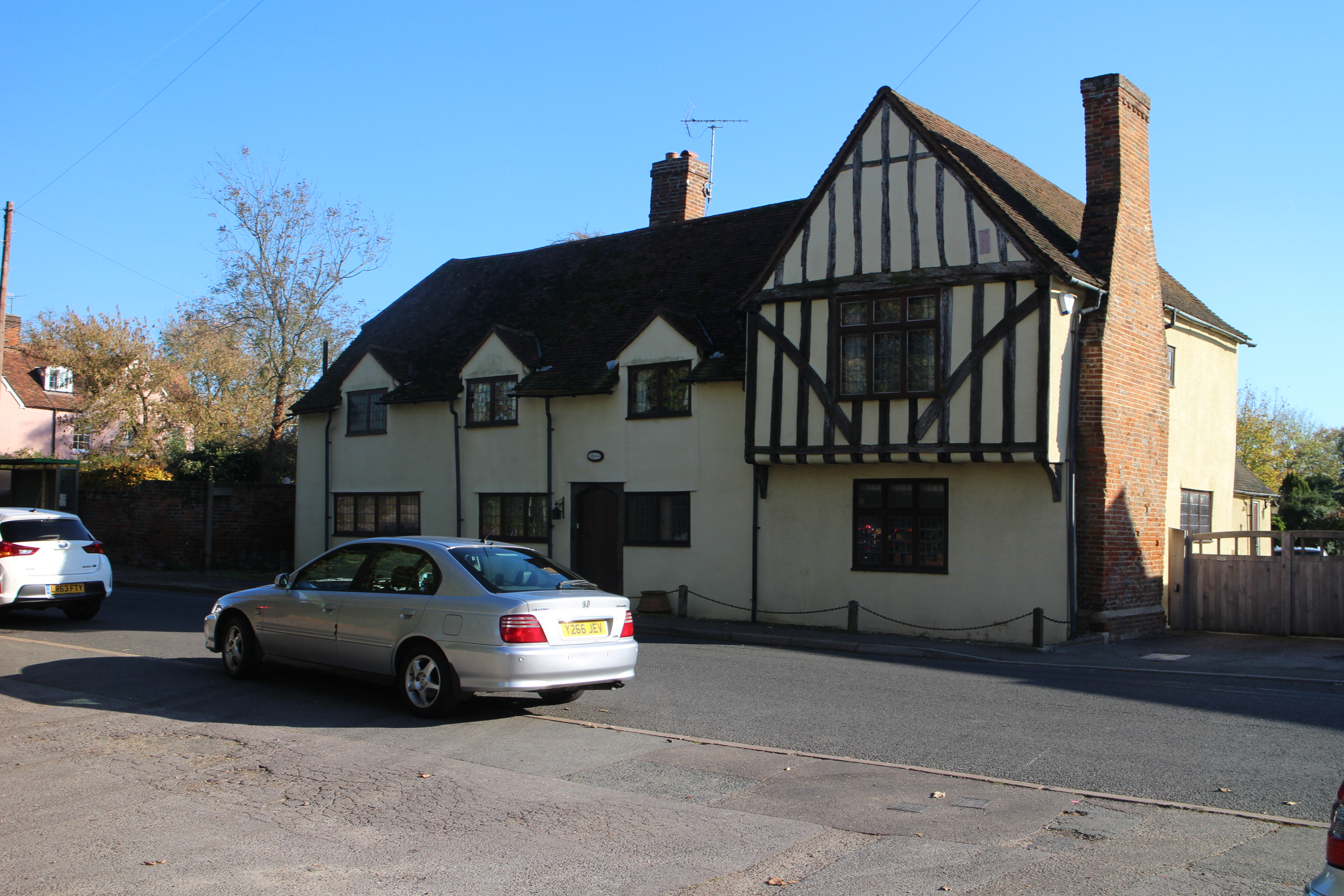 |
| Essex House, with old 'Jev' our transport that never failed. It was Paul's pride and joy and Japanese of course. This car by the way, pride and joy of Paul's heart was immaculately kept, though Lucy was allowed in it. But she could never be left alone, for somehow she always managed to turn on the alarm if we left her. So while Paul mooched round the middle aisles of Lidl for half an hour, Lucy and I would sit and watch the world go by! Jev is still alive and kicking with Paul's younger son. |


.JPG)


