Showing posts sorted by relevance for query visiting stonehenge. Sort by date Show all posts

Thursday, December 19, 2013

Visiting Stonehenge


Things bubble in your mind when you come back from a journey, was it that terrible M25 with its long queue to the Dartford Tunnel inching its way slowly, or the rain clouds that chased us back from Stonehenge.  But the visit was memorable, the new Visitor Centre a classic work of art in the sodden grey landscape of the Stonehenge Downs.
Arriving just before 9.30 and waiting at the gate to be let in, police, security men, and of course the press were there in full force, in fact the car park already looked full from a distance.  The reason it was so full was of course everyone from English Heritage must have been there to, smartly dressed in their new brown anoraks, they welcomed everyone and chatted away; to say that everyone was on a high is probably true. 
The great day had finally arrived, years of discussion, costing much more than the £27 million bill for the centre, and of course the great tunnel under the A303 discussed endlessly but which never materialised.  Denton Corker, the architects had created something unusual in the visitor centre, and many people will find fault, the clever thing about it though is that the roof is built angling at both ends so that it disappears, so that you only seem to be looking at the two end tips, it covers both buildings below. There is an overhanging bit of the roof punched out like lace, very pretty.
We got on to the land train, there will have to more after seeing the coaches pile in later on and the queues grow, the train consists of a jeep and three trailers, seating about 15 people per trailer, though next year 'timed appointments' seem to be the answer. The turning space allotted to them seems small,  but there was an old Salisbury bus there as well, useful for disabled people with wheelchairs.
We walked the last few hundred yards to the stones, there is still of course the remains of the old visitor centre being taken to pieces, and the camper vans (hippy) lining the drove way, legally of course but it is a bit sad to see them clutter the landscape.
Clockwise round the stones, the crows reigning supreme in the blocked off area, as they have done for centuries, the stones their domain.  Stonehenge has a powerful message as a temple and though the theories and books will be written ad infinitum in fact we should just marvel at the elegance and grandeur of these sarsens and bluestones.  Someone was ringing a Tibetan singing pot at the Heelstone, Australians accents behind us and we had travelled down with a Chinese lady, who worked at Cambridge and spoke perfect English.  It is well to remember that Stonehenge is a World Heritage Site and therefore the world comes to visit the stones.
Another quick memory, as we drank our coffee in the restaurant, Julian Richards walked through, and me slightly struck fanwise asked if I could take a photo, which I did.  We had a long conversation with him, he has been round Stonehenge for 30 years or more, so the opening of the new VC, and especially the destruction of the old centre is a great day for posterity.

The Visitor Centre

This is another protest that did not seem to take place, think it was the campers by the stones wanting 'free access'

Heelstone

Protest by Druids

The Land train

Display inside the exhibition 

Julian Richard - archaeologist

I could not quite understand this interpretation, it seems that there is a double trilithon of bluestones

The grass needs to grow

He is one of the problems


Saturday, November 18, 2017

Saturday 18th November


Well the world looks brighter today, one tyrant (Mugabwe) is on his way out, and another tyrant has rescinded his appalling act of legitimately bringing in trophies of killed animals from Africa, so to those terrible pictures of trophy hunting that every now and then appears on F/B I hope Trump's son feels guilt.  There is one terrible photo of a female hunter nursing on her lap the dead body of a giraffe, it haunts me still.
To gentler things, as we had to give a lift to the Malton station to a friend going up to London, we drove on to Castle Howard garden centre - I just love Christmassy displays - and the avenue up to the obelisk was  lined with lit up large xmas trees.  I bought some glittery candle holders and two bowls of hyacinths for their fragrance.  Lucy helped herselve to a strange toy, which we paid for and got her usual dog treats at the counter.

So what did June photos show, well apart from the accident, irises, roses and bees....


Visiting Stonehenge


Friday, November 5, 2021

Bloopers - Standing with stones.

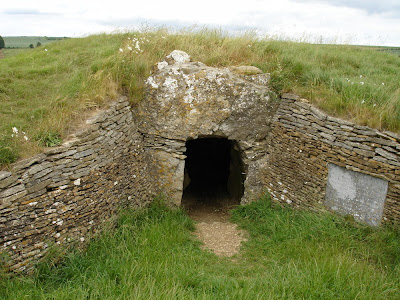
Stoney Littleton Long barrow, and though you cannot see it, one of the stones at the entrance is an ammonite stone.

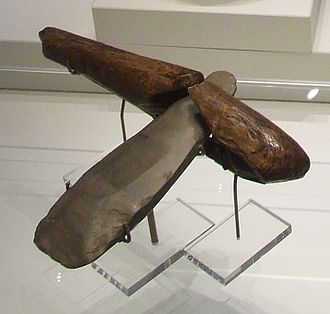
I can't resist it! Pat has just mentioned her Langdale Axe found on the farm.  Part of my life was devoted to prehistory.  The old heavy  stones hauled from quarries to stand in lines or circles, or to build a Neolithic tomb, they excited me.  It was the immense old age of the stone first used by man as a tool or covering for their dead.  They stood on the landscape, enigmatic, holding the secrets of the past.

A polished greenstone Langdale Axe is a thing of great beauty.


So Pat's mention of an axe brought to mind Michael Botts and Rupert Soskin's epic journey round this country visiting prehistoric sites.  I have sat quietly spell bound on the Preseli Hills knowing that this was one of the pathways from Ireland to England that our ancestors trod.  I will believe quite happily that the bluestones of Stonehenge came from this area, how they hauled the stones to the sea is beyond my comprehension.

Stonehenge, Avebury and Stanton Drew I have wandered round, in all kind of weathers, one favourite just outside Bath is Stoney Littleton Long barrow a place of retreat for me when home life got too much. There are thousands of sites around, and if you would venture to Europe, as far away as Russia or even to Japan you would see the same fashioned cromlechs that you find in this country.

So a 'blooper' short video of the two above.  A blooper video by the way Pat is all the bad 'takes'.  As someone who has dug in all kind of weathers, traipsed over moors in cold and rain I know exactly how Rupert Soskin feels.  Though I expect he has never stood on Hadrian's Wall with a kicking baby still inside him as I did, and wondered if I was about to give birth in the cold.  


Standing With Stones, the long movie is also there as well, with the funny bits cropped.  It never made it as a television programme, but the two of them seemed to have a good time in their camper van. The Langdale stone quarry is difficult to get to, and is featured at 9 minutes into the Blooper video, in the mist.


Monday, March 27, 2023

27th March 29023


Drone visiting;  After looking up where I live now, I thought I might visit where I had lived before.  Thirty years in Bath is quite a while.  My son still lives there and walks most days for exercise in his part of it..  

The first thing to strike me, was the stonework of the whole city, Bath stone is simply called Bath Stone, described as golden, though I would call it a dull cream mostly.  The mines the stones were taken from were Combe Down and Bathampton.  But its light colour gives the city a flush of cleanliness, something that is sadly lacking in the town I now live in, with its light film of industrial coal blackness.  I am not contrasting here only seeing it as it is.  After all as a child I was brought up in the 'Black Country' or the Midlands where grottiness reigned when I grew up.

Bath is of course a tourist town, the population of tourists often equalling the inhabitants and has the usual problems with traffic.  But it's prime beginning as a Roman town with hot springs plus Bath Abbey are must places to visit.

I see it through its Roman history, the villas on the outskirts of the city show colonisation by the retirees.  It has plenty of myths,  Bladud its original founder.  Who, suffering from leprosy and working as a herdsman for pigs, noticed how the pigs wallowed in the hot spring.  So he decided to as well, and of course was cured of leprosy.

John Woods and his son in the 18th century were the architects of the Georgian Bath you see today.  Woods the Elder, was also interested in the myths and legends that were written at the time.  He was also interested in Stonehenge and Stanton Drew Circles (I have written of this elsewhere) and Freemasonry, all these things will be found in the buildings. 

Bath has a strong character in its buildings protected of course by preservation legalities.  Bombing in the second world war, destroyed a part of the city  down by the river, I think mostly Victorian buildings but the great terraces survived as did The Royal Crescent, Queen's Square, The Circus and the Abbey.

Another strand of thought occurred and I found a drone film about Stanton Drew stone circle, the third important stone circle within the South-West area.  So I tapped a few letters and what came up was a Megalithomania's video of Stanton Drew stone circle, which is but a few miles down the road from Bath.

Here we enter the world of sacred lines and geomancy - the art of arranging buildings or other sites auspiciously.  Not something I am a follower of but an interesting train of thought to think about.  John Woods the Elder also like the titillation of things that were not quite true.  And The Circus building's were centred around the dimensions of Stanton Drew and the circle of trees in the centre represented Stonehenge circumference.

The Circus


Sunday, September 12, 2021

12th September 2021

Three generations in the household, gentle bitching going on, what are we going to do today?  Hebden Bridge and tea and cakes have been dismissed there is a Pride festival going on.  Chicken roast and everything else under the sun has been decided for lunch and then a walk around Tod and try and find a decent cafĂ© for cake and tea.

I have been toying with writing about Stanton Drew stone circle, visited many a time in the bleak months of winter, why I don't know.  Such places appeal to the soul, the steadfastness of the stones in their landscape.

The 'jumble'


It was like the photo of the stone in Switzerland, unless the farmer could move it, or worse, blow it up, these stones remain forever dotting the landscape.

My favourite stone which I nicknamed the Lion Stone

  
Things I remember about the stone circle is the two young men standing in the lee of a stone out of the wind, one playing a harmonica, the thin piercing noise seeming so light against the weight of the stones.  Once in summer with Paul we came across a 'dowser' called Paul Daws someone who believed in magnetic forces under the earth, mostly to do with water.  In leyline terminology you could join up churches with stones many miles distant.  Try doing it with a ruler, it is easy, too easy some might say.  Both skills are decried by woo-woo people, but then plain fact can be boring.

The remains of the avenue


Stanton Drew largest circle of the three, is the second largest in the country, and yet it stands outside the mainstream of importance, Stonehenge and Avebury dominating.

See how the church tries to dominate the stones. These three stones are in the local pub and called 'The Cove' though now they are seen as part of a Neolithic barrow.

There was a small road of stones leading down to the river, messed up by  the farmers of old, and now an intriguing jumble..  Did visiting chiefs or dignitaries come by boat and walk in stately pomp up this avenue?

Intriguingly, the stones are on top of an earlier wooden circle, nineteen concentric circles.

Whilst looking for Paul Daws, I came across the 'Solstice Operation'.  It was the time of the stand off between police and travellers at the Stonehenge Festival.  A time in history that marked change in how we viewed the police in 1985.


Tuesday, September 23, 2008

Stanton Drew

The lion stone

This weekend visiting sites two stand out in my memory, East Kennet Longbarrow and Stanton Drew stone circles, both seen on beautiful sunny days, so rare this summer.
But it is with Stanton Drew that I first start out. Two years ago I photographed all the stones in the Great Circle, marvelling at their extraordinary size, colour, I gave some names to them at the time.
What can you say about this third 'cinderalla'of stone circles in the West country, Jodie Lewis in her book "The Neolithic of Northern Somerset" will give you facts and figures, Gordon Strong in his little book: Stanton Drew and its Ancient Stone Circles" will give you nibbles of fascinating information.
So for instance here we have an explanation of the name Stanton Drew;

" it was a fact that during the Middle Ages the land surrounding the stone circles was owned by the Drogo family, a Norman name which evolved into the Anglo-Celtic word for magician, sorcerer or druid 'Dru, Dryu', or more commonly today Drew. Hence ..Stanton Drew or Stone Town of the Drew Family" Gordon Strong.

Be that as it may the little pub in the village that houses the Cove, and quite a few chickens - the speckldly ones as well - is also called the Druid Arms.
He also gives the etymology of cove "derived from Old English 'cofa', an alcove (ancient German for hollow place). The Cove sits somewhat uneasily encased by the wire fence of the pub garden, with the church centrally place between it and the stone circles as drawn by Stukeley.


The Great circle is impressive, though many of the stones lie fallen, there colour and texture is remarkable so different from the Avebury Stones, whilst there wandering amongst them, we came across a dowser, Paul Daws was his name and had a long and interesting chat with him, he had apparently found some hidden circles up by Castlerigg. Only one person in seven can dowse so he informed me, obviously I'm one of the other six which is a shame


Three stones in the smaller circle


A lovely jumble of stones down by the two (hardly there) avenues down to the river

Many of the stones at Stanton Drew were broken up, burnt or buried in Medieval times, but it is believed the strong folklore tradition of the 'Wedding Stones' story probably helped save the rest. It was a multi-phase site, the earliest being the timber circle of nine concentric rings, or maybe of the henge, though the bank is not visible, and therefore a ditch and bank might not have been there, but it is suggested by Jodie Lewis, that the ditch might have been filled in between the wood and stone stage, as Aubrey says "it is a ploughed land and so easily worn out"
Lewis goes on to outline the case between 'closed' and 'open sites' an archaeological construct which sees the closed nature of timber circles and henges against the open nature of stone circles, this theory was somewhat exploded in the latest idea on Stonehenge where a 20 foot palisade was thought to be erected around the stones, though it seems a further revision may see the huge post holes as tree throws.
Composition of stone; the fluours and transparent crystallisation... shine eminently and reflect the sunbeams with great lustre" Stukeley
The stones are made of several different rock types; and it is interesting to note Lloyd Morgan (1887) list
The Great Circle; Silicious breccia, dolomitic breccia, oolitic limestone, coarser sandstone.
The north-east circle; Silicious breccia
The south-west circle; sandstone, silicious breccia, dolomitic breccia.
Hautville Quoit; Fine grained cherty sandstone
Tynings stones; oolitic limestone
The Cove; dolomitic breccia.
Many of the stones are striking because of the mixed appearance, they are conglomerates, with brightly coloured ragged surfaces - very dramatic - shot through with iron colouring, almost giving the appearance of blood, the quartz and dark coal conglomerate fissured deeply.
Some stones also have strong anthromorphic shapes, whilst others are solidly square, yet the instinctive response to them is that some stones represent something , either gods or ancestors, to the people who put them them up. They probably came from within few miles of the site.

Tuesday, December 21, 2021

Happy Winter Solstice

May the Light be with you:  Today, instead of Stonehenge and its gathering, a much more distinctive arrival of the Turning of the Year.  This at Newgrange in Ireland where the sun finds its way down a long passageway to illuminate  it.

Already we are unsettled by this new variant of the Covid virus.  Omicron rushes through the population with indecent haste.  The government holds fast that we will have a Christmas, but each and everyone one of us must make our own decision. 

My granddaughter came back yesterday from visiting her friend and flatmate in Manchester, worried that they would both not be able to make it  back to London, and that she would have to spend a couple of months in Tod.  She mentioned two cases of Covid, one of a 12 year old and one of primary school age that she had heard of.

So it is a clever bugger this virus, we need to take the precautions the scientists are telling us but enjoy the festival of Christmas, just less hugging ;)


And if you want stories to wile away the hours.  Binnorie and Gelert will be found here

Wednesday, March 11, 2009

Greensted Church, Essex


The church is one of the oldest stave churches in Europe, and before I go into the detail, the atmosphere of the place is a must.

A quiet country lane just outside Ongar, leads you to the church, it lies just in front of a large house and is surrounded by about three other oldish houses, one a pretty little church lodge.
The church has dormer windows which is unusual for a start, it is quaint and very pretty, the white wooden tower gives a modern look to the little brick and wooden church behind it.


Peace pervades the small churchyard, crocuses in front of the doorway, and those marvellous timber staves are extraordinary. Dark black, and so finely fissured vertically that it is almost like a comb, but there the similarity stops, for there are elegant waving shapes as the lines move round old knots, or branches that were sawn off all those centuries ago. This is where the marvel comes in, you are touching wood grown in the Saxon age; the wood is hard, almost like stone, it has weathered the centuries and now stands rock hard against the elements.


But I said it was a pretty little church, and so it is, open the door and go inside, the first thing to strike is the darkness of the place, your eyes must grow accustomed to the wealth of detail inside.


The staves inner faces are inside, and everywhere there is wood, the high timbered and cross roof beams are ornamented with carved pictures in the triangulated intersections. The pews are closed and you must unlatch a small gate to sit on a seat; the stained glass is mediocre, but there are certain windows that have a lightness of touch in their execution.


For sale, and here the parishioners have been very generous in their bounty, there are pots of jam, marmalade, lemon curds and that new fangled delight red onion marmalade. Priced at about £2 a jar, they are quite reasonable and all have the name of the church on them.
Outside wandering round the bank and you will see the little triangle opening that appears in the stave, apparently this was the door, but I have'nt quite worked out its relationship to the rest of the church.


Outside towards the east, and the land slopes away from the church, and looking over the wall that bounds this side, are open fields with a public footpath going through. There is a pond to the right, which would probably have been the water source in Saxon times. Walk along the footpath, and the land to the left is landscaped for the large house with another pond for ducks, and there is a great cluster of snowdrops scattered under the trees with artless natural ease.


If
you have muddy shoes, a great bag of plastic carrier bags, is at the church entrance for putting over your shoes, rather spoiling the inital impression. But the day was beautiful, sunny and the Essex countryside a quiet mix of brown ploughed fields, and the green of pasture land. Woods there were aplenty, marching right up to the fields they curved in graceful lines, there soft browns and silvers etched in the sun, with a rich mush of golden brown litter underneath.


Information from the Church handbook; - The church is one of the oldest wooden churches in the world, and the oldest wooden building standing in Europe. The two earlier wooden buildings dating from the late 6th or 7th century, people have worshipped continuously here for 1300 years.
First church at Greensted; It was St.Cedd who probably inspired this little church, he began his work in 654 A.D. and probably the first church at Greensted (probably a clearing or space in the vast forest of which Hainault and Epping are the only remains). An archaeological dig in 1960 revealed the impression of two simple wooden buildings under the present chancel floor, these would have been the 6th or 7th century buildings. The logs had been held upright by simply dropping them into a trench, and it goes on to say that people would have gathered outside to listen to the celtic missionaries and priest. The dedication to St.Andrew suggests a Celtic Foundation.


The nave was added in about 1060 A.D. but the timbers seem to go back to 845 A.D. and since then there have been many more additions, stretching from the Norman piscina, to a Tudor window, the church tower could probably have been built in the 17th century and then of course the Victorian restoration which includes the dormer windows and porch.
St.Cedd's Church of 654;


Notes; It is interesting to see from the handbook that there is a great deal of interest in this 'stave' church from archaelogists and historians, and English Heritage is to fund some work on the church. The mind always falls back to the Norwegian staved churches and to one in particular with the beautiful carved doorway, but the Greensted church predates these, and is truly a Saxon building that has survived.
It is an 'original' very much like Stonehenge in its class, that wood and the shape of the old building with its building techniques is still there after a thousand years is a bit of a miracle.
To imagine this small wooden building, very cosy, for it is a great deal warmer inside a wooden church than our old stone churches, filled with people maybe, or originally perhaps a visiting monk or priest evangelising to the Saxons, who have only just recently settled in the area, the solitary monk living within the confines of the earliest building.

The thatched roof rustling with mice, the great forest stretched for miles around and the people working quietly in the clearing to build a life in this wilderness. So these heathen Saxon people would have heard the sound of the bell (or bangu) of the wandering monk, he would come through the trees, food would be offered, and then the great discussion about whose god would prevail, we know the inevitable truth about which god did win out in the end but this first 'church' would have been very unlike the churches we see today.

Photos courtesey of Littlestone.

More photographs here