No matter what the universe has in store, it cannot take away from the fact that you were born. You’ll have some joy and some pain, and all the other experiences that make up what it’s like to be a tiny part of a grand cosmos. No matter what happens next, you were here. And even when any record of our individual lives is lost to the ages, that won’t detract from the fact that we were. We lived. We were part of the enormity. All the great and terrible parts of being alive, the shocking sublime beauty and heartbreak, the monotony, the interior thoughts, the shared pain and pleasure. It really happened. All of it. On this little world that orbits a yellow star out in the great vastness. And that alone is cause for celebration.”
Thursday, August 27, 2020
Pandemics and Wayland's Smithy
Tuesday, August 25, 2020
Tuesday 25th August
The weather is grey and wet, the country is in a sombre mood, the virus can mutate, I might even put a quote from Carl Sagan on the bottom to cheer you up. And don't forget they are even thinking about messing around with Land of Hope and Glory and Rule Britannia (Imperialism is about to meet its maker) But wait, I haven't been visited by The Illuminati, so there are some things to be grateful for! Could be because I write boring blogs. Is that reverend promising money? - another false promise.
Sunday, August 23, 2020
Sunday - and Rudston
Things that keep me occupied. Firstly, it is spinning, this rather pretty colour arrived this week, 'denim' merino..........................
It spins up much darker, but is fairly soft. Something I finished about a month ago was a pattern you knitted down in a circular fashion, think this is more Scandinavian style, anyway I used a Lopi yarn, which is Icelandic, The wool is rather scratchy, but first time effort was not too bad.
My contribution to 'slow living' ;) which reminds me that there is an organisation planning our walking routes all over Britain - Slow Ways. Always there is a fight against the law of 'trespass', and given some people's use of the countryside a great deal of education on how to treat place is needed.
I shall get back to my love of old barrows, just read a Rowan William article on death, but for now will quote Canon Greenwell as he talks about the Rudston monument, which is a helluva stone situated in a church yard in the Wolds of Yorkshire. It stands like a beacon on its hill, slightly shrunken by the Christian upstart of a church, but once it reigned superior towering above the ground below which had four cursuses in all directions and the aptly named Gypsey Race running through. I have rather fallen in love with Greenwell, a dedication to old stones and past history and the written word, his dogged devotion to the pagan past needs some explaining.
"The position which the barrows occupy is a very striking one, and must always have been so. The men who raised these funeral mounds looked on the one side over the swelling upland of the wold, bleak, grey, and treeless, their eye taking in on many a distant ridge the burial places of chiefs of other, though perhaps kindred, tribes: whilst upon an outcrop of rock, lifting itself out of the valley just beneath them, rose the lofty monolith which now stands in Rudstone churchyard....There it stood, telling them perchance that at its base was laid a mightier warrior than him who were they entombing on the height above; or it may have spoken to them as a symbol of belief, according to which their lives were regulated, and marked the place upon which it stood as holy ground. If they looked to the South there was nothing but a dreary tract of marsh-land, which seemed almost interminable, wherin however, amidst the coarse vegetation and brushwood, the deer and the wild swine had their haunt, and where the beaver made a habitation almost equal in point of construction to those they had themselves the skill to form. Beyond was the sea, as yet enlivened by no sail."
Forgive him his Victorian interpretation, female equality is yet to be espied on the horizon but as Ann Woodward from 'British Barrows' I have taken this quote from, says of him he was describing what he saw at the time.
![]() |
| Rudston Monolith |
| Still dominating https://northstoke.blogspot.com/2017/02/tuesday-or-valentines-day.html |
Friday, August 21, 2020
21st August 2020 - barrows
Yesterday was spent mostly reading, a friend had given me a link to 'Incense Cups' or the Wessex Bronze Age 'grape cup's. We should be so grateful that people make their work available on the net in the form of PDFs, and if anyone is bored by archaeology, move on;).
![]() |
| Wiltshire museum, from Upton Lovell barrow |
Incense cups are found in barrows, not every barrow though, and from the 19th century vicars who so loved to rob these barrows, were the first to find them but fortunately they did record their finds. They are miniature cups, often perforated, this is what gives the idea of shaking either oils/water or maybe the scent of wild flowers over the deceased. You can see down below it was the Canon William Greenwell that attacked the Bronze Age barrows round Yorkshire, and round Somerset it was the Reverend Skinner of Camerton.
To most people the rounded barrows are boring, their method of construction can fall into a pattern, the burial will tell of either inhumation or cremation and the grave goods will give some evidence of wealth, or what was personal to the dead person.
So yesterday I set off on another mind adventure and with the help of maps tracked down some barrows not too far from the village. To understand this area of the Pickering Vale, you must imagine a large inland lake thousands of years ago surrounded by hills, they are now called 'The Tabular Hills' and the 'Howardian Hills'. The waters slowly drained away to leave marshy land, that is why there is a lot of 'Carr' landscape names around. Bronze age people seemed to have lived on the higher ground, so evidence of barrows will be found on high, often unproductive land. Also of course on the moors.
Well Slingsby barrows are just on the top of a wooded hill on the road to Castle Howard, I have often seen the public footpath that crosses the road but never have walked it, something to do in the future, well a small cup was found in one of these barrows, now in the 19th century, the antiquarians often referred to the 'rude' nature of the artefact, and this cup is certainly clumsily made, as many of the cups illustrated are in the PDF file, in this thesis from the University of Bradford.
![]() |
| Slingsby cup |
Barrows are reflections of a culture, long gone now, we can only speculate about the effort that went into digging and then covering these mounds, obviously reverence for the departed but also these people emotional needs, sometimes the remains of flowers are found, alongside a treasured dagger or necklace of beads.
Now here is for me one of the most obvious of barrow cemeteries to be found in the Mendips, there are in actual fact two sets of barrows, the Ashen Barrows (8) and the Nine Barrows following the ridge of a hill, ceremony is obvious, were they following the lines of a track way? Were they showing respect and reverence of the ancestors as they passed? I find these photographs please me still, the excitement of first glimpsing as I and Moss trudged over the fields, the bullocks to be negotiated, and then the golden grass crowning the barrows in the distance.
![]() |
| Ashen Hill Barrows |
![]() |
| Priddy Nine Barrows, 7 here and two on the lower ground |
Dear old Moss who just loved these hikes, as long as you took a ball for him.
The earliest evidence of settlement in the area now occupied by Slingsby and Fryton is the remains of pre-historic barrows – roughly circular burial chambers – located on higher ground on the southern slopes of Slingsby Bank Wood, to the south of the village. No fewer than 13 local barrows were excavated in the late 19th century by Durham-born archaeologist and antiquarian, the Rev. William Greenwell. Articles discovered include five incense cups, two large funerary urns, as well as smaller items such as bone pins, dress fasteners and arrow heads – all of which he donated to the British Museum in 1879.
https://www.slingsbyvillage.co.uk/history-of-the-parish/
Wednesday, August 19, 2020
Wednesday 19/08/2020 - Sun disc
Watching a Question Time video of the Prehistory Guys yesterday evening, and someone said what is your favourite object from prehistory, Michael Bott said the Bush Barrow gold lozenge found in Wiltshire My mind went back to my favourite object, and realised it was also gold and it was the small four inch, highly decorated Lansdown Sun Disc found in one of the barrows near Bath Racecourse.
It had spun my imagination as I walked each day, often early morning, when the sun gently forced the moon out of the sky. One of the great moments of clarity came when I looked behind me as I came to the dog leg that turned left in the field and looking back saw the 19th century Lansdowne obelisk just on the horizon, probably about 30 miles away. It caught my breath, I was looking back to the Cherhill downs where the obelisk had been built, and just beyond that was of course Avebury one of the great prehistoric stone circles of this area.
Prehistory almost became clear to me, it wasn't the reams of knowledge read, the dating of archaeology it was the landscape that held the mystery of all our ancestors. It holds our dust, gentle shapes will tell of old farmhouses, stone will show prehistoric hut circles, and occasionally, just occasionally the earth will yield treasures from the past.
I would look back at that time when artificial light was a thing of the future, I realised the 'Milky Way' would have been clear in the sky, as would the round of the sun and moon to tell the seasons. Imaginations had been caught by the 'Sun disc', was it held up to the sun for reflection? or did it trace the moon's path. Does it matter? Brief moments in history, foreshadowing religion in all its daily rituals.
Something I wrote in 2008 And it was all down to Mike Aston, long gone, illustration in a book.
Tuesday, August 18, 2020
Tuesday 18th August
I don't know whether to laugh or cry, my granddaughter got upgraded to 3 - A*, though she did not put pen to paper in an examination room but was upgraded to her predicted result. Of course I am happy, boasting in granny fashion but my thoughts are with all those youngsters who are now awaiting their fate as they go through other assessments.
Where does the problem lie? incompetent government, a system screwed to the right, class, social needs or how the media reads the news. Perhaps I read the wrong social chitchat but it seems to me that when you are called a professor it means something.
My heart wept yesterday, as a young black student was so desperately disappointed in her downgraded marks, whilst I cannot believe any government would so be flagrant in marking down schools in poorer areas but marking up in the independent schools, I am not sure about this but part of me believes it.
Yesterday I threw away the Guardian not reading about the 20 new ideas for a different answer to how we should act from now on because basically I believe as a nation we are not prepared to fight for a fairer deal for everyone. But one idea, let the 16 year old vote for their future, we might see a different approach and the back of a government that is so incompetent.
Monday, August 17, 2020
Everything is topsy -turvy
Turning to Alice in Wonderland this morning, because there is really not much to add on the state of the world................ Choose what you will, it doesn't get better ;)
- "Off with their heads!" ...
- "Why, sometimes I've believed as many as six impossible things before breakfast."
- "It's no use going back to yesterday, because I was a different person then." ...
- "We're all mad here." ...
- "Curiouser and curiouser!"
Saturday, August 15, 2020
Life in the village
Today, Friday, I am writing late, it has been warm, the butterflies dancing round the buddleias ecstatically, tried to film them (hopeless) Graham and David came over from the church whilst I was doing this, they had been doing some work there. We discussed the village and how nothing was happening much, David wants money raised for the church's upkeep, but strawberry teas and coffee mornings are obviously not happening. Paul was good at bringing things together but it seems that everyone does things in an individual manner now, there is no clear group ready to bring the village together.
![]() |
| Those were the days! |
It needs someone to grasp the nettle firmly, and tell people what to do;) We have three avenues of coming together, the church, the Parish meeting and the social group who arranged the three meals though the year when we all meet, normally in the pub. But circumstances due to the plague keeps us apart.
I would like to see Margaret Wood recognised as well, especially as they are using her legacy to spruce up the church. The paths have been laid with fresh gravel and the coke house is to be renovated, new roof and where the floods eat away at its foundation stones, renewed.
Something is happening tomorrow though which is the 75th anniversary of V.J. day, Jo will ring the bells and her husband who is a town crier will read a proclamation in his front garden. We are to stand on the pavement on the opposite side of the road. It will be a small tribute, they are both truly British and you can't help but love them for their sincerity. Can you imagine they have been together as a couple since meeting in India as children, now in their eighties.
75th Anniversary of V.J. day and the end of World War Two on 15th August 2020
Thursday, August 13, 2020
Thursday 13th August 2020
Tuesday, August 11, 2020
Tuesday 11th August 2020
Sunday, August 9, 2020
Coetan Arthur another cromlech
![]() |
| Coetan Arthur |
Another cromlech, found in Pembrokeshire at Carn Lidl. This land round here is the most holy of lands for it is where Saint David lived. Now will you take that statement seriously I wonder? In the town of St.David, the cathedral and the Bishop's Palace testify to Christianity. Let us stay with the solemnity of 'place' for it is what drew me back time and time again, even now it calls. And as for my introduction see what Jan Morris says....................
![]() |
| St. David's cathedral tucked away in the valley |
![]() |
| The Bishop's palace |
"The holiest place is Dewisland, Pebidog, a stormy protrusion from the coast of Dyfed which was once a spiritual hub of the whole Celtic world. Not only does the countryside there seem holy by its nature, so ascetic, but so exciting, all bare rock and heather headland falling to the wild Atlantic sea, but its associations too are intensely sanctified. Here the Celtic missionaries came and went on their journeys through the western seas, and here the itinerant Irish preachers landed on their way to evangelize a pagan Europe. Everywhere there are the remains of shrines and chapels..... and in the middle of it stands the most venerated structure of it all, the cathedral of Dewi Sant, not only the mother-church of Welsh Christianity, but the vortex of all that is holy in Wales"
At first you must park in the car park at Whitesands, somehow one is not really prepared for 'the bare rock and heather headland' in a mundane car park. But walk, up the path passing the rocky headland on your right, its bleakness will slowly enter your soul. How did people survive here, you cannot grow food on this thin layer of soil that lies on top of the rock, and yet they survived. Two Bronze age cairns are to be found huddled against the rock face just above you. 20 minutes walking you reach a plateau, and then realise there is a small valley to cross before you once more ascend a small hill to find the above cromlech. And believe me it is not easy to find hidden in the jumble of rocks. Coetan Arthur is not earth fast (back of capstone resting on the ground) this capstone is propped by two orthostats and a small pile of stones behind.
Just beyond this cromlech there is an Iron Age fort sitting on the edge of the headland out to sea, it is called Warrior's Dyke, probably named by Sabine Baring Goulding of 19th century fame, he wrote hymns and dug in a sort of archaeological manner!
Warrior's Dyke consisted of six round hut circles, interesting finds included coloured beads and loom weight stones, civilisation in the bleakest of landscape......
![]() |
| There were three defensive walls, now scattered to this settlement. |
![]() |
| Warriors Dyke at the end |
![]() |
| A hut circle |
![]() |
| walk through the doorway |
Saturday, August 8, 2020
Chasing Butterflies
Out in the garden, with its freshly mowned lawn in the early morning, I noticed the perennial sweet pea growing at the back of the buddleia, had been ramping along the bed, escaped from its mooring to the trellis, but still able to produce flowers for the house. The light, early morning, is gently different.
But I wasn't the only creature chasing butterflies, the little cat, who had slept the night under the old hawthorn in the churchyard was also at play. I am so grateful that the buddleia is attracting many butterflies, we watched them, me with my camera, and luckily Green eyes was unsuccessful in her hunting.Always suspicious, but I am the one that feeds her and am always greeted with miaows when she sees me come into the garden to let the bantams out.
Friday, August 7, 2020
Going back in time
Yesterday too much sadness to even write anything, the bad news continues apace. The people of Lebanon are getting angry about their government, glass heaped in piles on the streets, bodies still to be found, please let there be an answer.
The virus still dominates the news, we are beginning to learn what a load of rubbishy people we are as places such as Dartmoor is strewn with litter. Watched an interesting programme about two brother doctors as to how they were seeing the virus in the hospital and a care home. Watched middle-aged men slowly recover from death's door. Saw the love and loyalty in care homes. One of the brothers had a dose of Covid19, but got over it. Then, and this is important, his heart began to behave erratically and he had to go back to hospital with an arrhythmic heart, the truth being is that the virus does terrible things to the body afterwards. I shall now stop going down a depressive road.
Well my mind has strangely been on cromlechs in Wales, it has wandered over past journeys, always alone with dear old Moss. I always left behind a full house, though I must have been escaping the language students that dotted my life for many years and taking a moment when they were not there.
The journey out of Bath to the motorway outskirts of Bristol, then crossing the toll bridge would give me a thrill of escape. The drive down to Pembrokeshire along half empty roads, the excitement mounting. I normally took a small cottage which had other cottages and the farm made into holiday cottages.
The first cromlech that has been haunting my mind was way out in the middle of nowhere. You had to walk along a long path to get to it, past a derelict school set in the middle of the field. The children would have probably walked up from the coastal village below in the 19th century.
Well yesterday I listened to a 'live' discussion on Youtube about stones, and someone mentioned about whether all these cromlechs were in actual fact covered by earth. Well looking at the scant soil cover in Wales, the answer must be surely not, the stones were hauled into place and then the capstone levered onto the upright stones, which are invariably pointed.
Garn Wynda is a simple burial place, looking over the West coast to the sea, as so many of the cromlechs are on the West coast, this was a final burial place. It is very 'hidden' in the rock face, the tall stone to the left of it is the only distinguishable feature.
The term sub-megalithic or earth-fast was coined by Glyn Daniels and to quote him;
"What we have called the 'sub-megalithic' tombs, however, are in a different category. The essential constructional pecularity of these tombs is that the capstone instead of resting on two orthostats and appearing roughly level, has one end resting on the ground-the whole monument being triangle in section. For this strange and fairly rare kind of monument, which exists in Western France, Wales and Ireland - many names have been suggested such as primary, earth-fast,demi-dolmen or half-dolmen".......
There is a small group of sub-megalithic or earth-fast cromlechs to be found in Pembrokeshire and further afield. They are simply designed with the capstone normally supported by one or several orthostats with the back of the capstone resting on the earth or a ledge, they are very low to the ground the underlying ground having been dug or excavated out and the capstones raised on small uprights.
Tuesday, August 4, 2020
Tuesday, 4th August 2020
Sunday, August 2, 2020
Sunday - a day of peace
| A dense packed raceme of tiny four petalled flowers |
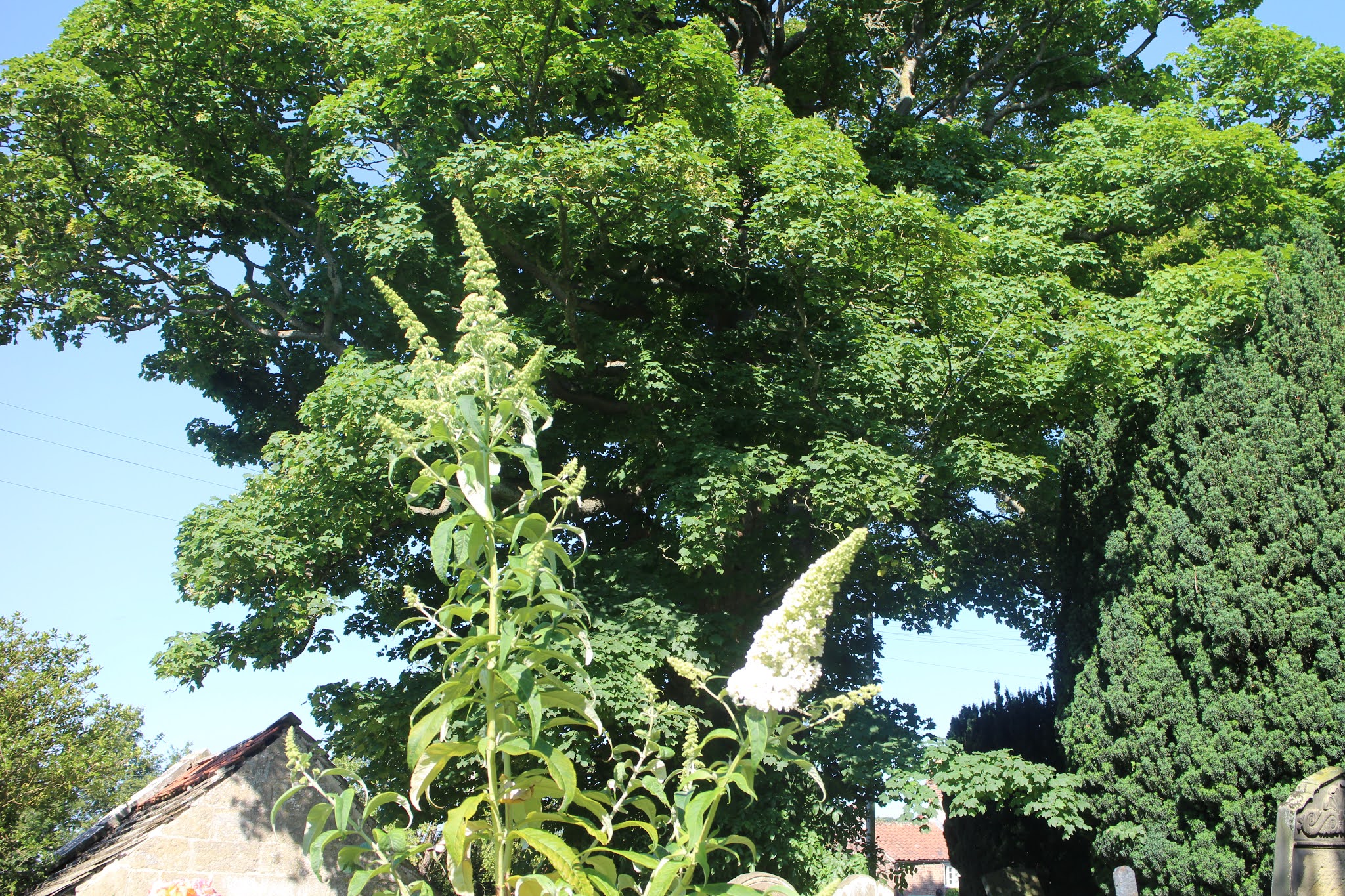
| White buddleia. Somehow absentmindedly I have planted a lot of white amongst the roses. |
| White cosmos, there is a virginal purity about this flower |
| Fennel a favourite plant with its light feathery air. Already showing the colours of Autumn |
| Bountiful blackberries |
Saturday, August 1, 2020
Thought for the day
![]() |
| Snatched from F/B. Thank you Tom Spark |