Monday, January 16, 2012

Patchwork


The photos of Whitby are coming to an end, so a couple of the partly furnished cottage with patchwork on the beds,the pale turquoise one is from Laura Ashley fabrics at least 30 years old. So that was one of the reasons to take up patchwork again, it is not very good, but there are such a lot of books on the market that perhaps I can do better this time round..... Reading one and it said it's better to start simply with two colours, so I did 3 patchwork squares and decided on the blue one for the main affect, unfortunately the material shop is in Whitby and I realise I need  more of everything to finish it.......


Patchwork squares 
Attic bedroom

Middle bedroom 

The clutter of Whitby tiny back lanes 

http://bathquilters.weebly.com/exhibition-2011.html

Friday, January 13, 2012

Esk


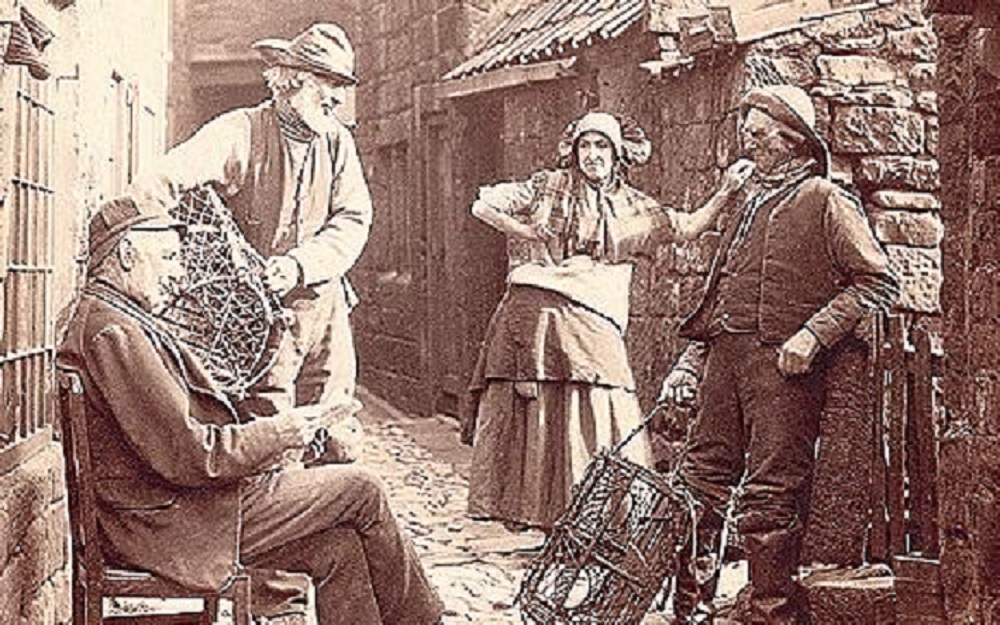
This photo by Sutcliffe is of fishing folk in Robin Hoods Bay
Though we did not do any walks by the River Esk, it is so much part of the local geography, as lanes bend and wind down to the valleys where the river runs through, these rather dull photos do capture some of its spirit. The pub we stopped at down by the river had a large stuffed fish in the bar, caught in the 1960's by a young female, cannot remember what sort of fish it was, think it was a trout. There were fisherman in the bar talking about the river and fishing, a timeless occupation. The top photo was taken by Francis Sutcliffe a Victorian photographer and with what must have been very clumsy equipment took many photographs of Whitby. There is a gallery in Flowergate selling reproductions, very beautiful and reminiscent of the old fishing port.
River Esk viewed from the car

Esk is a slightly muddy river 

Pretty little bridge with stepping stones in the background 

Pub but may have been a mill at one stage in its history.


Monday, January 9, 2012

January and summer

Nigella Damascena; courtesey of Commons Wikipedia
This is the time of year when I miss the garden flowers and wildflowers, my mind trails over roses and bluebells and I expect if I was a prisoner the rich hoard of the mind would compensate for the lack of flowers, but no it is winter, albeit a warm one, my geraniums have not even succumbed to the frost yet. Nigella Damascena or love-in-the-mist, favourite words of mine has been going through my head the last two days, it is such a pretty colour the pale blue of the petal surrounded by the green ruff. It came to mind the other day when I noticed that the Bishop of Damascuse had consecrated the Egton Chapel in the 14th century, seemed strange a Bishop coming from an exotic land to the cold North Yorkshire moors.
Margery Blamey says of Nigella -"short, erect branched hairless annual, with soft finely divided feathery leaves, bluish without a ruff of green leaves below" so it is a wild flower of cultivated arable fields but of course strays into gardens, scattering its seeds year after year.

Well last year for my birthday this January I asked for an orchid, I have never been quite at home with exotic indoor flowers but there is always a first time, so I experimented with my camera..... candlelight gives it a lovely warm shade of yellow, the multiple burst is something I had never clicked on before, the white proper flash is the true colour.


Well for the moment blogger is working for me, I have given up on the multi browsers, they sit like little devils at the bottom of my screen waiting to pounce - we'll see.

Saturday, January 7, 2012

Photos


Lille caught unaware just about to play hearing aids with wine glasses 
Row of Georgian Houses
Cobbled alleyway down to small cottage

West Pier with placid seas 

There are so many shapes on the skyline 

Whitby  early morning 


A belated Matilda birthday party.


testing

The rain in spain stays mainly on the plain hopefully......
Still testing sadly

Thursday, January 5, 2012

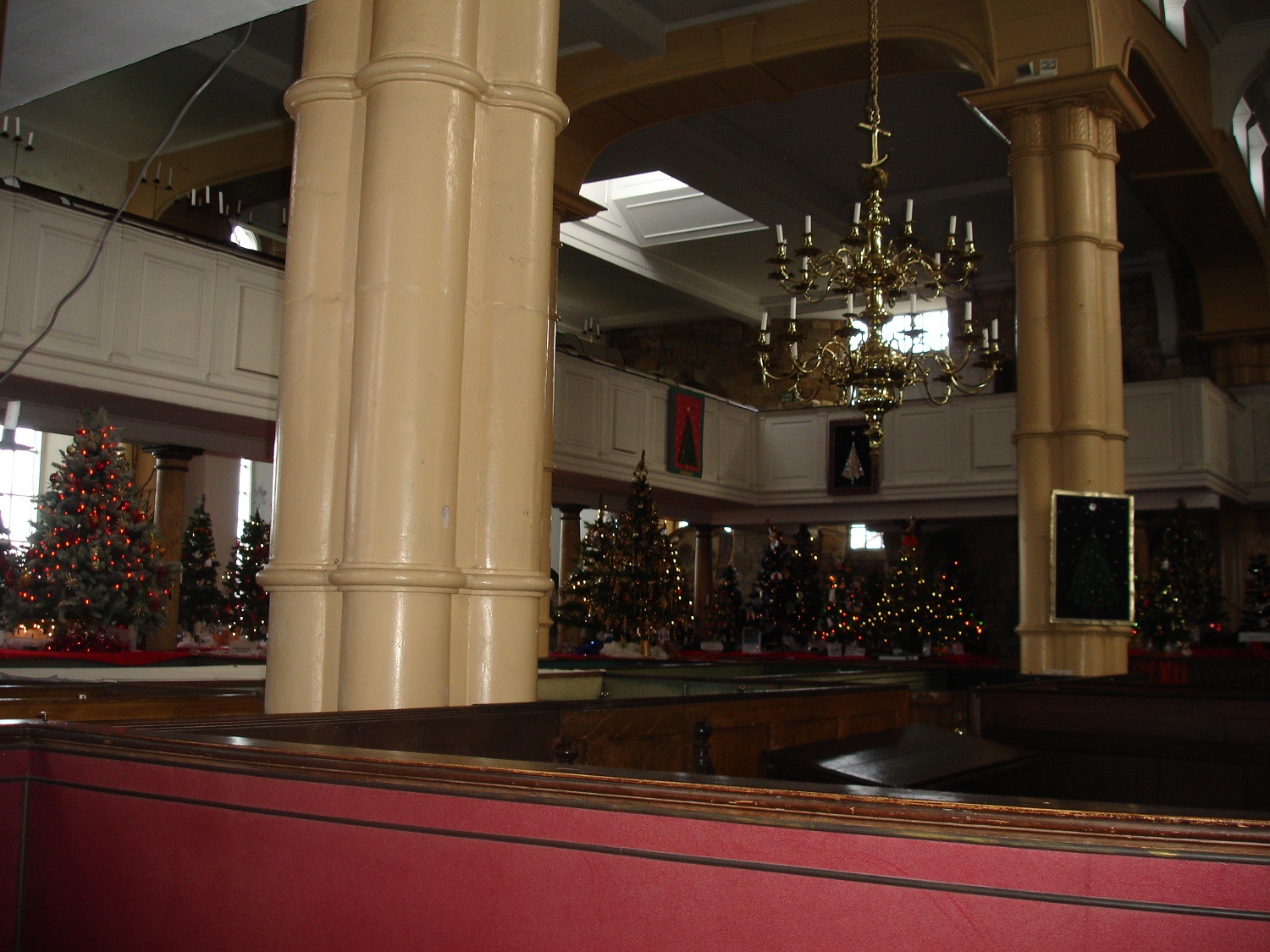
Christmas trees at St.Mary's Church, Whitby


This is the church that stands next to the ruined Whitby Abbey, and I do not find it particularly pleasing though Jarmara defends and likes it, its not exactly beautiful or churchlike in its proportions but nevertheless it is striking and very impressive.  It is very unusual in design, this part of old Whitby had been given the name of Prestibi by the Danes and it is said in the handbook that this represented the 200 years between Saxon and Norman times, and its unusual proportion lies in the fact of the earlier church at this particular time  dictated  the layout of the present church  The church itself is aiseless and has been so for its 876 years to date, it was first mentioned by name in 1120 AD, the galleries were put in at a later date to provide more accomodation for seating, and there is a great central iron stove with its iron pipe running right up to the roof in the centre of the church.
The Christomas trees are decorated and donated by local businesses, the high boxed pews and gallery are the show pieces that stand out, barley twist pillars at the beginning of the chancel which is an old part of the church, and I managed to capture another old set of pillars, not easy amongst the decorated trees.


Those two black paddle like things (hearing aid) were for the vicar's wife in the 19th C as she was deaf. Can't actually believe that because they are enormous but that is what is said on the plaque.


http://www.fortuneskippers.co.uk/history/fortunes_history_a.html

Egton Village and St Hilda's mortuary chapel


This will be a ramble through my photos;

I have, since childhood in fact, played the game of where would I like to be buried, my love thinks it is morbid, but as death is our ultimate end I think we should have a say in it, it is a bit like ghost stories and sci-fi, all of which I am interested in. 
So this expeditionary drive took us through some villages outside Whitby, I think we were heading for Guisborough.  Egton village was small and neat, typical for the area, but we turned down a lane following a large hedge cutting machine and then spied on the right along a grassy lane this small mortuary chapel.  Grey and bleak it was, as was the weather, but interesting to note on the notice board that the mortuary had replaced an earlier church.  The gravestones had that weathered mossy look beloved of all graveyard fans;) and it was very peaceful with views over the moors.  It captures times past a place of peace and rest, and no its not on the lists of 'would be', I am not sufficiently acclimatised to Yorkshire. But it also captures for me the grey rugged air of Yorkshire, you see it in the farms you pass on the moors; stout stone walls, small windows huddling away from the prevailing winds, a hard life in the depths of winter but beautiful at times.


East Pier - Whitby


Well this is the East Pier which lies under Whitby Abbey, a storm thrashed sea on the 18th December, LS's birthday wish for an early morning walk. The streets are empty and the sea is magnificient, the pier itself has great slabs of pavement stone in shades of browns and creams. We had gone down Henrietta Street to find the smoke house for kippers a small shop with the smokehouse behind and a very strong smell of kippers, they are delicious but do tend to smell the house out. Jugged kippers with bread and butter is the way to eat them. Edie the butcher who has a small shop down from where my daughter lives also smokes his bacon here - completely different from supermarket 'smoked'.
Storms seem to be the flavour of the weather at the moment, we delayed our journey back on tuesday, came back wednesday, and now another storm has raged through the night in Essex.
Henrietta Street is mostly cottage holiday homes, smartish and expensive, though I must admit would not like a great crumbly cliff at the back of our cottage.... It was a memorable walk on the pier, as waves washed across the path and the early morning sun which rises behind the Abbey tinged the world. The two piers make a very safe harbour for the boats, the water so still on one side and the great thrashings of the sea on the other. Whitby has this gift of showing what life was like for the hundreds nay thousands of sailors that sailed into this safe harbour and those that did not make it. There is a photo in St.Mary's, of a sailor wearing the first cork safety life jacket, the sailor was the only one to survive out of a crew of 12 when they went out to rescue a boat that had come aground.


Henrietta Street leading to the East Pier

Rough Seas off the Pier

Again

It seems an age since I wrote anything on the computer, mostly because the small netbook we took up did not work most of the time and I must admit a holiday from the computer screen is well worth taking, especially when this computer UPDATES, which this one has and has now lost all my old settings though apparently I can restore back but it is all a bit of a worry. 


Thursday, December 15, 2011

Christmas Greeting

A Happy Christmas to everyone who reads my blog and let's hope the New Year will not be too bad. X

Monday, December 12, 2011

Lemon balm

Melissa Officinalis - Bee Balm

Geoffrey Grigson writes in The Englishman's Flora "The rain may long ago  have washed out a chalk cottage in Wiltshire, a cob cottage in Devon or Cornwall, but as likely as not a thick thicket of bee balm will survive"
Morning Minion mentions it in her blog, and it reminded me of my old garden, lots of lemon balm everywhere not only did it travel happily around  but I also planted it in bare spaces. I have a love affair with plants and trailing and bruising the leaves through one's fingers of this particular plant was a joy on a summers day.
Many years ago I kept angora rabbits of different hues, and they also enjoyed eating the young leaves, especially my first rabbit Daisy who would savour the various plants like a connoisseur and showed a remarkable intelligence for a rabbit!
So what else does Grigson say; it comes from Southern Europe, early botanists identified it with melissophyllon 'bee leaf' of Dioscorides and the apiastrum of Pliny.  You can drink it as a tea, though there is no real taste to it and Grigson says it was by no means as nice as the smell of the leaves,  I haven't got any here in Essex, have not seen in the nursery centres..

Pliny's words; It is profiterablie planted in gardens about places where bees are kept, because they are delighted with this herbe above all others.. for when they are straied away they do finde their way home again by it..

Gerarde added that you should rub the hives with the leaves to attract more bees and also which causes the bees 'to keepe togither'

Sunday, December 11, 2011

Plasauduon, Carno, Powys

An animation of a typical 17th century 'Severn Valley' house in Powys, Wales, might even contemplate doing a miniature of one of the rooms....... it's so pretty.

Thursday, December 8, 2011

Ted Hughes

Curlews in April

Hang their harps over the misty valleys
A wobbling water-call
A wet-footed god of the horizons

New moons sink into the heather
And full golden moons

Bulge over spent walls

Ted Hughes has the final honour of being immortalised at Westminster in Poet's Corner this week, not sure how  he would have felt about it, Thomas Hardy did not want it after all but there we are great men get remembered for past deeds.  Two of my favourites of his poems are Hawk Roosting and the other Pike.
He is a favourite poet of mine, just love his incisive gloomy words, have a taste for morbid poets such as, Hardy, R.S.Thomas and Hughes.  When we travel up North we pass through, or at least go by a sign for Elmet, the old British Celtic kingdom in West Yorkshire or though it probably stretched out over the vale of York in its heyday.   Its particular geological situation makes it a hard place.  One of his book of poems is called 'The Remains of Elmet' and we have a copy illustrated by Fay Godwin's black and white photographs bleakly and darkly sitting side by side with Hughes poems.  It was a gift from an Irish friend a couple of years ago over here for a meeting at Avebury, he had crossed over to Wales and stopped off at Hay-on-Wye to look at the book shops there. So when ever I take down the book I think of the meal we all had at a little pub near Avebury;
I suppose his love of fishing echoes some of my childhood exploits fishing for trout on the farm near Pumpsaint in Wales, accompanied by the farm's friendly pig who snuffled around whilst we fished and then wandering home through the fields with the farmer, on one occasion with a very bouncy live eel in his knapsack that was fried when we got back.  This farm was the place my grandfather would come down to at weekends and catch salmon when they were around, these salmons would fill the fridge at home...  I once ate some pike as a child, it is supposed to be muddy to eat, but I'm sure I can only remember its teeth,  it was caught from a murky lake if I remember rightly.

http://www.bbc.co.uk/news/entertainment-arts-16055750